Marketing
The return of the Unicorn Frappuccino: Can Starbucks avoid the headaches this time around?
When Starbucks created the drink nearly nine years ago, it generated significant consumer interest, leading to thousands of social media posts but also criticism from Starbucks baristas. As it prepares to reintroduce the beverage, one question remains: Will the Unicorn Frappuccino create the same operational headaches it did nearly a decade ago?
June 11, 2026 by Amy Sorter — Writer and Editor, Connect Media
 ChatGPT
 Grok
Grok Perplexity
 Claude
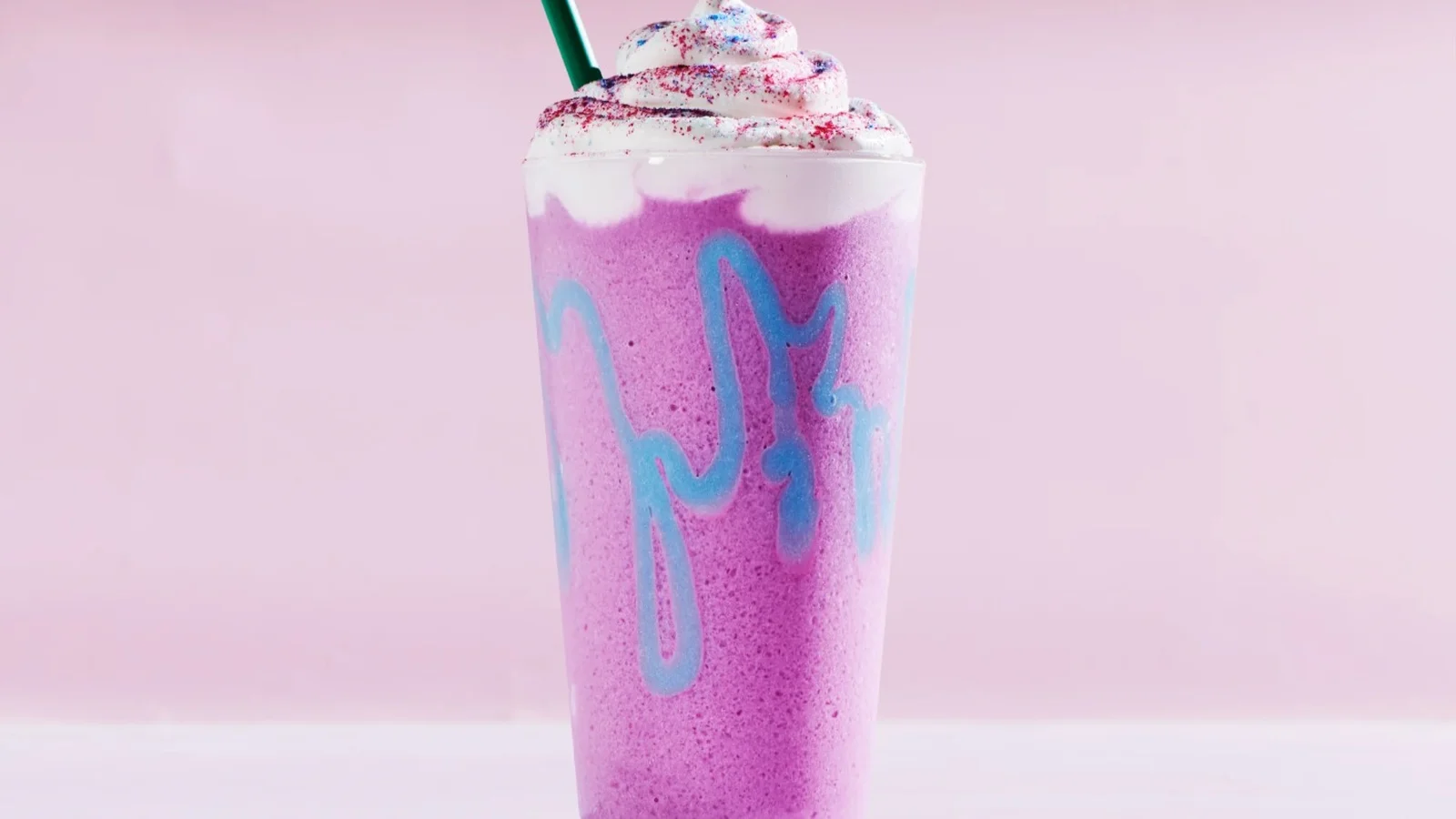
Starbucksis bringing back the Unicorn Frappuccino, a brightly colored beverage made with mango-flavored syrup, pink powder, blue and pink toppings and vanilla whipped cream. Originally introduced in April 2017 as a limited five-day run, it quickly became a social media sensation during the height of the "unicorn" trend. Fantasy-themed foods, beauty products and apparel were everywhere before disappearing into obscurity.
Fast forward to April of this year, when the drink popped up at the Coachella music festival, sparking buzz about a possible return. Although Starbucks has confirmed the drink will be on the menu for one weekend this summer, it has not yet confirmed the exact date.
Angela Moore, owner and principal of restaurant consulting firm Moore Hospitality, told FastCasual that chatter in online barista groups points to mid-August as a likely time frame, and a variety of news outlets, ranging from Fox News and Peopleto Allrecipes,as well as social media influencers, have jumped into the discussion.
Beating the Operations blues?
When Starbucks created the drink nearly nine years ago, it generated significant consumer interest, leading to thousands of social media posts and considerable criticism from Starbucks baristas, who complained about its complex preparation process and the operational challenges it posed during peak business hours.
As Starbucks prepares to reintroduce the beverage, one question remains: Will the Unicorn Frappuccino create the same operational headaches it did nearly a decade ago?
"I predict that they will get all of the Instagram success that they saw the first time around," Restaurant Freedom Academy founder and former Chick-fil-A franchisee Jason Purvis told FastCasual. "I also predict that it's going to be incredibly hard, possibly a disaster, on the team member side."Purvis, who owned and ran Sidewalk Coffee & Bagel, said he doesn't see the company making changes to help streamline the execution despite Starbucks' assertion.
As a result, "Starbucks stores are going to see long lines, backed-up drive-throughs. Guests who want something other than the Unicorn Frappucino are going to be very frustrated," Purvis said.
On the other hand, the company has announced the promotion well ahead of the LTO, which Purvis said is a good thing.
"Hopefully, this means they will be able to staff at a higher level and set the stage behind the counter in a way that will help them to be more successful," he said.
According to an email sent from a Starbucks spokesperson to FastCasual, the company is providing training to support the baristas. The email also said that the Coachella introduction generated positive feedback from on-site baristas, which could help with a smoother launch.
Moore said that limiting the promotion to one weekend could help Starbucks avoid barista burnout, while benefiting from one of its buzziest products. It could also help simplify logistics and ensure enough inventory for expected demand.
Speaking of the inventory, "It will be interesting to see if the recipe has been tweaked or simplified, or if it will be the same concoction involving powders, syrups, drizzles and whipped cream," Moore said. "The original recipe was used at Coachella, so it's most likely the stores will stick to that as well.
Nostalgia is now trending
Starbucks has provided few details about the "why" of reintroduction, beyond noting that the drink was featured at the Coachella Music Festival in April, where it generated strong consumer interest. Moore said it also generated some problems.
"The company faced a huge backlash from customers in April when they announced that the drink was returning only to Coachella, not to stores," she said.
Building anticipation may be one reason Starbucks is eager to resurrect the unicorn, but another possible explanation is the growing popularity of nostalgia-driven menu items. Restaurants across the industry are reviving discontinued products and retro offerings to appeal to younger consumers who remember them from childhood or adolescence.
Starbucks would not be alone in pursuing that strategy. Earlier this year, Panera Bread launched a limited-time "2016 Menu" featuring several returning favorites. Quick-service chains have embraced similar approaches. Taco Bell introduced its Decades menu featuring items from previous eras, while McDonald's expanded its wraps lineup.
Chicken tenders have also experienced a resurgence. Wendy'smade its Tendys a permanent menu item in late 2025, while El Pollo Loco introduced Loco Tenders as a limited-time offering in April 2026.
Moore also suggested that the U.S. is facing the same domestic turmoil and international conflict that was experienced in 2017.
"The Unicorn Frappucino is the shiny, happy, colorful, decadent, sugary, non-partisan relief that can provide some solice this summer," she said.
Then, there's the financial aspect.
"The re-launch is a sure-fire way for Starbucks to drive up its stock price," Moore said. "They know this time around that the drink will generate a ton of buzz and send people flocking to their stores. It's an easy win."
The verdict
Whether the return of the Unicorn Frappuccino generates more social media posts from enthusiastic customers or frustrated baristas remains to be seen. Purvis said the move strikes him as an odd choice, especially as the company had been stressing a back-to-roots philosophy.
"When I see that they want to return to a gimmick marketing strategy, it raises a lot of questions as to their motives and intentions," he said.
What is clear is that the beverage's brief run in 2017 highlighted the tension between creating buzzworthy menu items and ensuring stores can execute them efficiently. Its return could offer Starbucks another opportunity to balance marketing strategies with operational realities.
About Amy Sorter

Amy W. Sorter is an award-winning journalist, copywriter and content producer. Sorter has generated quality articles, blogs and thought leadership pieces for multiple industries during her many decades as a writer. Her byline has appeared in local and national publications including the American Business Journal, Connect CRE, Bankrate, CURE Magazine and the Dallas Morning News.
Related Media
Food & BeveragePresented ByOracle
Subscribe
Get the latest news and resources from Fast Casual.
Recent Posts

Recent Podcasts