Operations
How Latitude Food Group CEO James O’Reilly is scaling &pizza, Tijuana Flats
As CEO of Latitude Food Group, industry veteran James O'Reilly is leveraging a centralized backend support model and rigorous operational discipline to strategically scale vibrant fast-casual brands like &pizza and Tijuana Flats without sacrificing their unique cultural identities.
July 30, 2026 by Mandy Wolf Detwiler — Editor, Connect Media
 ChatGPT
 Grok
Grok Perplexity
 Claude
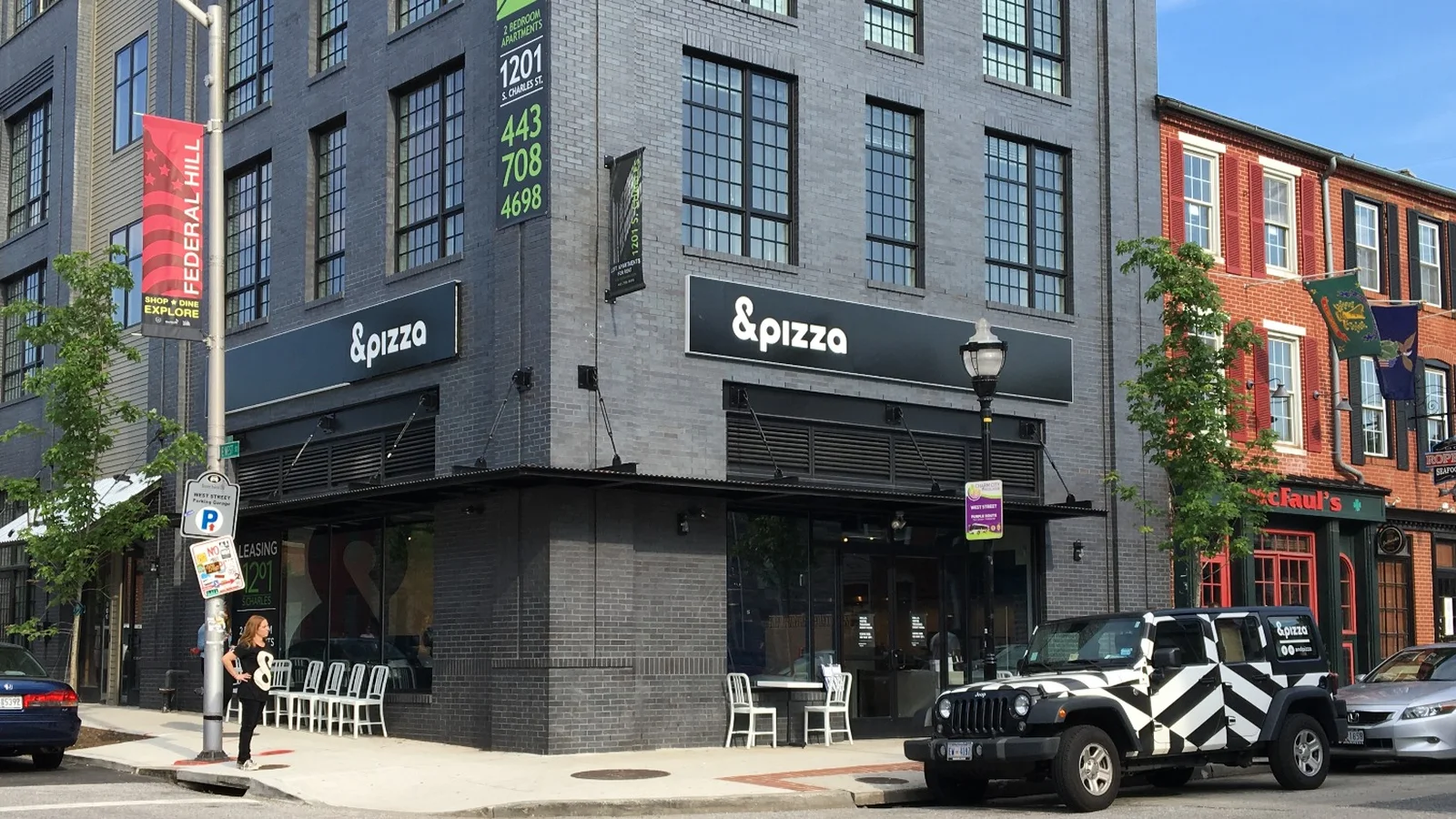
James O'Reilly is no stranger to the restaurant industry's biggest stages, having previously steered legacy heavyweights like Perkins, Long John Silver's and Pizza Hut U.K. Now, as the CEO of Latitude Food Group, he is applying his decades of operational expertise to a distinctly different challenge: scaling young, culturally vibrant brands like &pizza and Tijuana Flats.
For O'Reilly, the transition from mature giants to energetic upstarts is less about changing the fundamentals of hospitality and more about shifting the starting line. Rather than trying to evolve legacy concepts, his mission at LFG is to build rigorous structural discipline beneath brands that already know exactly who they are, ensuring their unique energy and identity thrive as they grow.
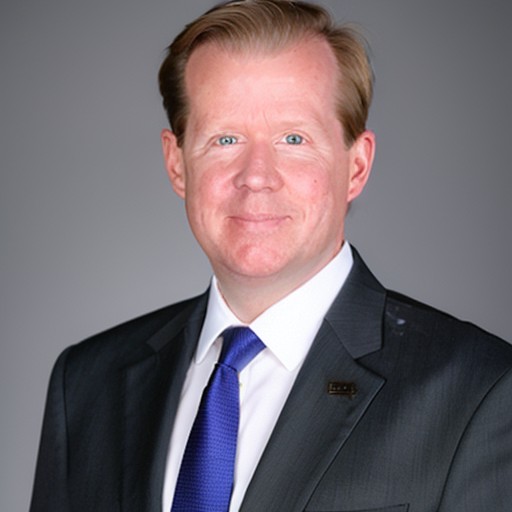 |
James O'Reilly, CEO of Latitude Food Group. Photo: LFG |
Under his leadership, Latitude Food Group is pioneering a streamlined platform model — centralizing heavy-lift services like finance, supply chain and technology so that the individual brands can focus entirely on culinary execution and the guest experience. This laser focus on improving unit economics serves as the engine for O'Reilly's ambitious expansion plans, which include aggressive franchise growth in highly contested U.S. markets like Florida and a strategic international leap into India. Armed with a "measure twice, cut once" philosophy, O'Reilly penned an email interview discuss the delicate balance of maintaining &pizza's anti-establishment edge, his uncompromising approach to franchise partner selection, and why true scalability relies on operational consistency rather than sheer noise.
Q. You've led major legacy brands like Perkins, Long John Silver's and Pizza Hut U.K. What unique challenges and opportunities do you see when taking the reins at a relatively young, energetic platform like Latitude Food Group?
O'Reilly: People assume the leap from legacy brands to a company like Latitude is a big one. It is smaller than it looks. The fundamentals never change: unit economics, consistency and a brand guests believe. What changes is the starting point. At the legacy companies I led, the scale was there but the brands needed to evolve. Here it is the opposite. &pizza and Tijuana Flats know exactly who they are. A major part of my role is to build discipline underneath the energy without flattening it. I experienced both challenges, and I would rather have this one.
Q: A recent press release mentions that franchising is the "engine for scale" for LFG. What is your immediate playbook for attracting the right multi-unit franchise partners to the portfolio?
O'Reilly: Job one is to ensure we are building investable unit economics, and that playbook starts upstream of any sales effort. Latitude Food Group exists to supply the infrastructure that can otherwise overburden smaller restaurant P&Ls: finance, supply chain, technology, procurement. When LFG absorbs that burden, unit economics improve faster, attracting franchise prospects. On partners, we will be selective to a fault. We want operators, not investors. People who can keep our brand promise in their markets. I have seen systems grow fast with the wrong partners, and the cost of unwinding those decisions is far higher than the cost of patience. Measure twice, cut once. Then move with speed.
Q: LFG currently houses both &pizza and Tijuana Flats. How do you plan to leverage the operational synergies between a pizza concept and a Mexican concept without diluting what makes each brand unique?
O'Reilly: I am careful with the word synergies. In our industry it usually means cost consolidation that guests eventually taste. That is not the model. Ours is simple: shared services, independent brand identities. Finance, HR, supply chain and technology live at Latitude. Brand, menu, marketing, and operations stay at the brands. A guest at &pizza should never feel Tijuana Flats in the experience, and the reverse is just as true. The test of a platform business is not how much it centralizes. It is whether each brand gets sharper because the model underneath it works. That is LFG's mandate, and it is designed to absorb future brands the same way.
Q: &pizza has always prided itself on being an unconventional, "culture-carrying" brand with a heavy focus on social progress and livable wages. How do you maintain that edgy, anti-establishment culture as you scale it into a massive franchise system?
O'Reilly: The conventional wisdom says scale kills edge. I don't buy that. What kills edge is carelessness. Brands lose their soul when they stop living it, and then a thousand small decisions sand it away. The work is definition discipline: codify what makes &pizza relevant and distinct, and make those things structural rather than sentimental. Franchising raises the stakes because we are trusting others with keeping the soul of our brands alive. That is exactly why partner selection matters more than unit count.
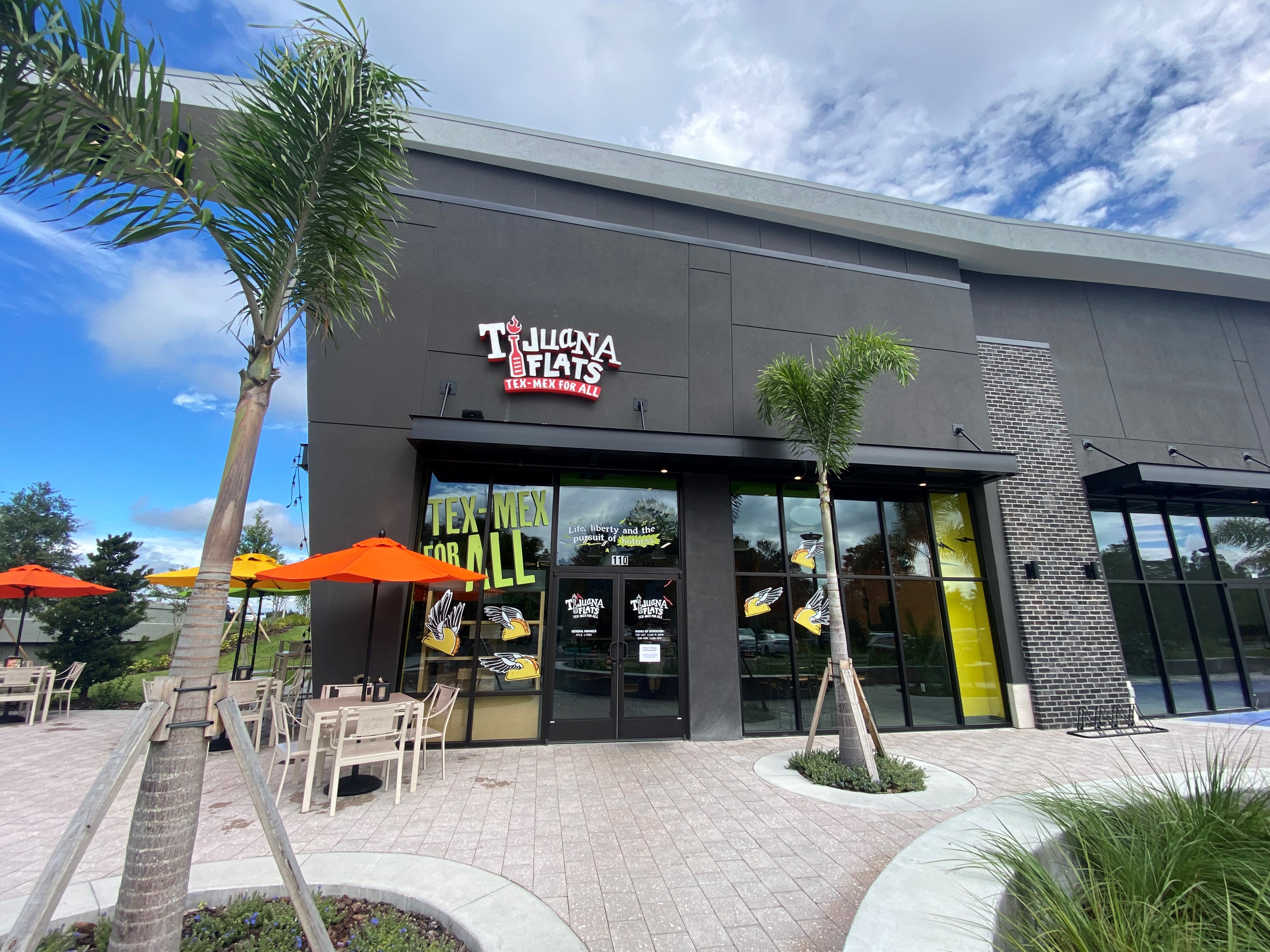 |
Photo: Latitude Food Group |
Q: &pizza is planning an aggressive expansion into new U.S. markets like Florida, Nevada and the Carolinas. Which of these markets do you view as the truest test for the brand's scalability outside of its East Coast stronghold?
O'Reilly: The short answer is Florida, because it gives us the least cover. Nevada and the Carolinas are strong growth stories, but Florida is the most crowded, most contested fast casual market in the country, with no hometown halo to lean on. It is also where Tijuana Flats has deep roots, which means real infrastructure and local knowledge for our team on day one. If &pizza can win there on hospitality, culinary credibility, and speed rather than novelty, the scalability question answers itself.
Q: Looking internationally, &pizza has development plans across India. What makes the Indian market the right fit for a custom, fast-casual pizza concept born in D.C., and what does the timeline look like?
O'Reilly: India fits because the format fits. A made-to-order concept with culinary range travels well in a market where customization is the expectation, not the exception, and where a young, mobile first consumer rewards brands with real personality. The vegetarian angle of the &pizza menu is a structural advantage there also. On timeline, we are doing the upstream work now, and we will share dates soon. Measure twice, cut once.
Q: Same-store traffic and sales are already rising for LFG. From a menu and tech perspective, where do you see the biggest opportunities to further accelerate &pizza's momentum over the next 12 to 18 months?
O'Reilly: Our momentum is real, but the fastest way to lose it is to do too much. On menu, our filter has changed. The question is no longer whether an item drives traffic. It is whether we can execute it consistently at 5pm on a Friday. Fewer menu introductions, more craveability, and every new item operationally validated before it scales. On technology, it should remove guest friction, increase throughput, and let our data tell us what guests value, so hospitality gets more personal rather than more automated. The brands pulling away right now are making fewer decisions, better, and that is the plan at LFG.
Q: Given your extensive background as a chief marketing officer, how do you plan to evolve &pizza's "daring marketing" strategy to cut through the noise in an incredibly crowded fast-casual pizza segment?
O'Reilly:When everyone gets louder, loud becomes wallpaper. Daring was never about noise for &pizza. It is conviction, expressed publicly, on things the brand already does well: bold flavor combinations, the people it hires, the neighborhoods it shows up for. These advantages are distinct for &pizza and we will continue to communicate them in ways that are relevant to existing and new guests.
About Mandy Wolf Detwiler

Mandy Wolf Detwiler is the Pizzamarketplace.com and QSRweb.com editor for Connect Media. An award-winning journalist, Mandy brings more than 20 years’ experience covering food, people and places. Mandy has been featured on the Food Network and has won numerous awards for her coverage of the restaurant industry. She has an insatiable appetite for learning, and, yes, she can tell you where to find the best pizza slices in the country.
Related Media
Subscribe
Get the latest news and resources from Fast Casual.
Recent Posts

Recent Podcasts