Fast Casual Executive Summit
'Going Live with Fast Casual Nation and Shake Shack:' Inside 'Project Catalyst' and what comes next
We are not talking about transformation in theory. We are talking about what it looks like inside a brand that is actively doing the work.
June 17, 2026 by Cherryh Cansler — Publisher, FastCasual.com
 ChatGPT
 Grok
Grok Perplexity
 Claude
I've sat through a lot of keynote sessions over the years, and most follow a familiar rhythm: big-picture strategy, a few polished case studies and takeaways that stay intentionally high level.
This one is different.
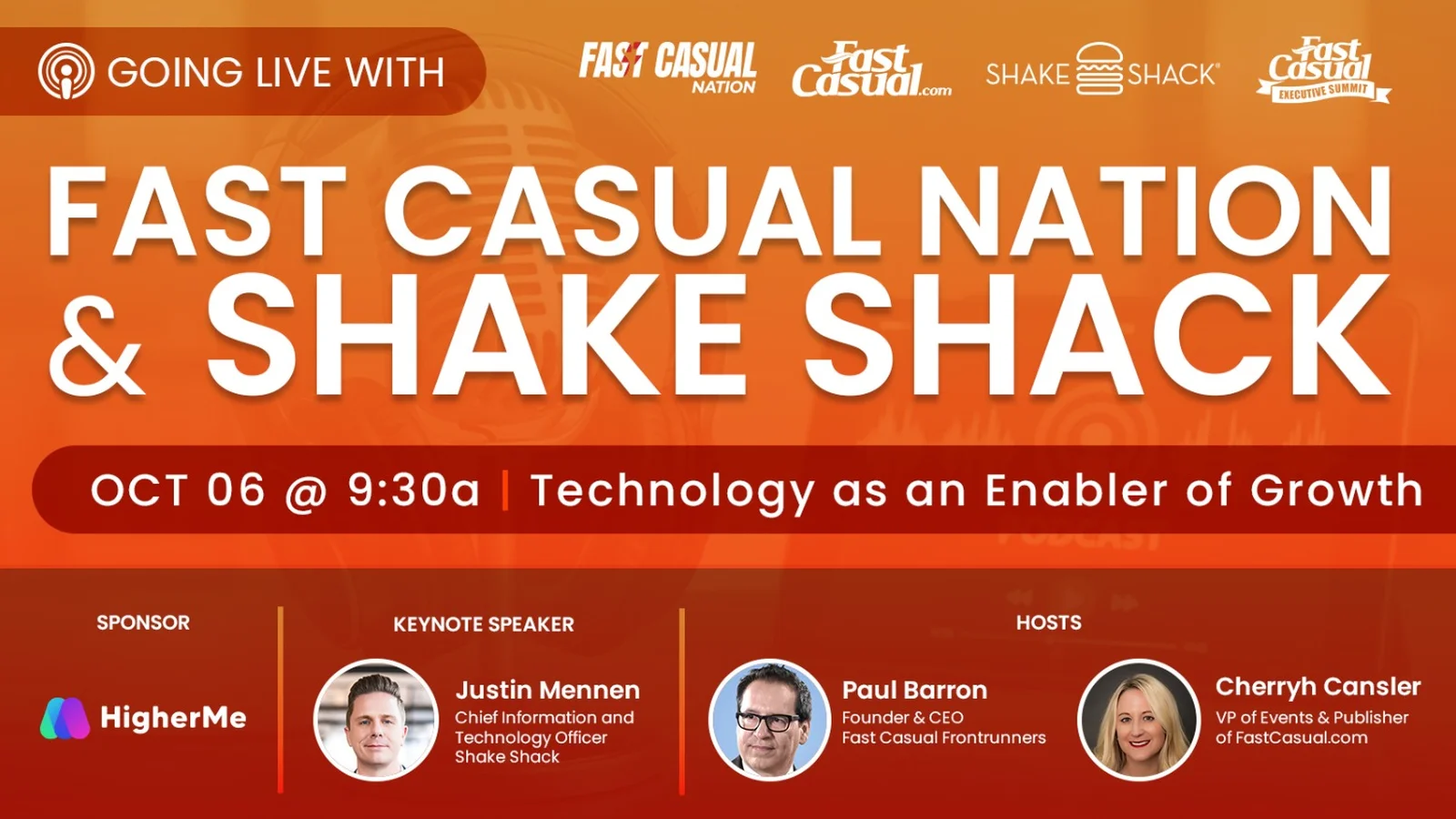
When Paul Barron and I go live with Shake Shack's Justin Mennen as part of the Fast Casual Nation podcast recording at the Fast Casual Executive Summit, Oct. 4, we are getting into the systems, the decisions and the operational realities that determine whether innovation works in a restaurant environment or does not.
The interview is centered on the chief information and technology officer;s work around Project Catalyst, a technology initiative designed to modernize its infrastructure as the brand eyes a long-term goal of 1,500 company-operated locations.. This is not technology for technology's sake. It is technology as an operating model.
AI in real operations
One of the most compelling threads we will explore is AI in operations; not in the abstract, but in the day-to-day life of a restaurant team.
Mennen will discuss how Shake Shack is exploring AI-driven insights to reduce friction for teams in the field, support faster decision-making and simplify complexity rather than add to it. That distinction matters. Too often, AI conversations in the restaurant industry drift into theoretical efficiency. Here, the focus is on what actually changes in a shift manager's workflow on a busy Friday night.
Loyalty built for relationships, not just transactions
We will also look at Shake Shack's first loyalty platform and what it means to design guest engagement from a foundation of personalization.
This is not just about points and perks. It is about building a system that strengthens the relationship between guest and brand in a way that feels natural, not forced. The goal is clearer communication, smarter engagement and a better understanding of guest behavior over time.
Modernizing the tech stack without breaking operations
Another key focus is modernization of core restaurant systems — POS, kitchen technology and the connective tissue between digital ordering and in-Shack execution.
Every operator knows system upgrades are not just technology decisions. They are operational risk decisions. Mennen's perspective on evolving these systems while maintaining speed, accuracy and guest experience continuity is one of the most practical parts of this conversation.
Building the data foundation first
Finally, we will discuss data — specifically, what it takes to build a unified view of the business that can support future innovation.
This is often the overlooked layer. Everyone wants AI, personalization and real-time insights. Fewer organizations are willing to do the foundational work required to make those capabilities reliable and scalable. That tension will be a key part of the discussion.
Why this session matters
What makes this live recording stand out is that it reflects where the industry actually is right now — not in a future-state vision deck, but in the middle of rebuilding systems, rethinking guest engagement and figuring out how to use technology without losing operational clarity.
We are not talking about transformation in theory. We are talking about what it looks like inside a brand that is actively doing the work.
I am looking forward to this conversation with Justin, alongside co-host Paul Barron, and bringing it to the stage as part of Fast Casual Nation. I am also grateful for the support of our presenting sponsor HigherMe, which continues to invest in conversations that matter to operators.
This is the kind of session where attendees will not just walk away with ideas; they will have a clearer understanding of how those ideas get built.
Register here by July 10 for the early bird pricing
Other speakers and topics
The Summit also features a variety of executives sharing their experiences, including:
- Clay Dover, CEO, Savory Fund
- Chris Schultz, CEO, Velvet Taco
- Shauna K. Smith, managing director & co-founder, Savory Fund
- Suzy Badaracco, president, Culinary Tides, Inc.
- Paul Barron, founder & CEO, Fast Casual Frontrunners
- Joel Bulger, chief marketing officer, WOWorks
- Kim Collura, vice president of marketing, Jason's Deli
- John Dillon, CEO & president, la Madeleine
- Mike Dollinger, vice president of development/operations, California Tortilla
- Jennifer Durham, senior vice president of franchising & development, Potbelly Sandwich Works
- Kelly Gray, co-founder, Rapid Fired Pizza
- Troy Hooper, CEO, Hot Palette Holdings
- Michael Magerl, president, Trabon Group
- Tonya McCoy, vice president of Marketing, Angry Chickz
- Sherif Mityas, CEO, BRIX Holdings
- Jason Morgan, CEO, Original ChopShop
- Todd Paladini, chief information officer, Freddy's Frozen Custard & Steakburgers
- Gracie Prasanson, vice president of Sales, Jason's Deli
- Sarah Rooney, senior vice president of Training & Technology, Dickey's Barbecue Restaurants
- Brandon Solano, CEO, RAVE Restaurant Group
- Darren Spicer, founder & CEO, 110 Ventures
- Chris Treloar, CEO, PLNT Burger
- André Vener, founding partner, Dog Haus
- Erin Walter, chief marketing officer, Freddy's Frozen Custard & Steakburgers
- Sam Worobec, co-founder, Training Simplified
Upcoming Events
Fast Casual Executive Summit
October 4-6, 2026 | Arlington, TX
The fast casual industry's BIGGEST event is back! Join industry leaders for game-changing ideas, powerful networking and serious fun.
View AgendaRegister NowAbout Cherryh Cansler

Related Media
TechnologyPresented ByOracle
Subscribe
Get the latest news and resources from Fast Casual.
Recent Posts
Recent Podcasts