Technology
4 ways AI-using restaurants are cutting food, labor costs to outpace competitors
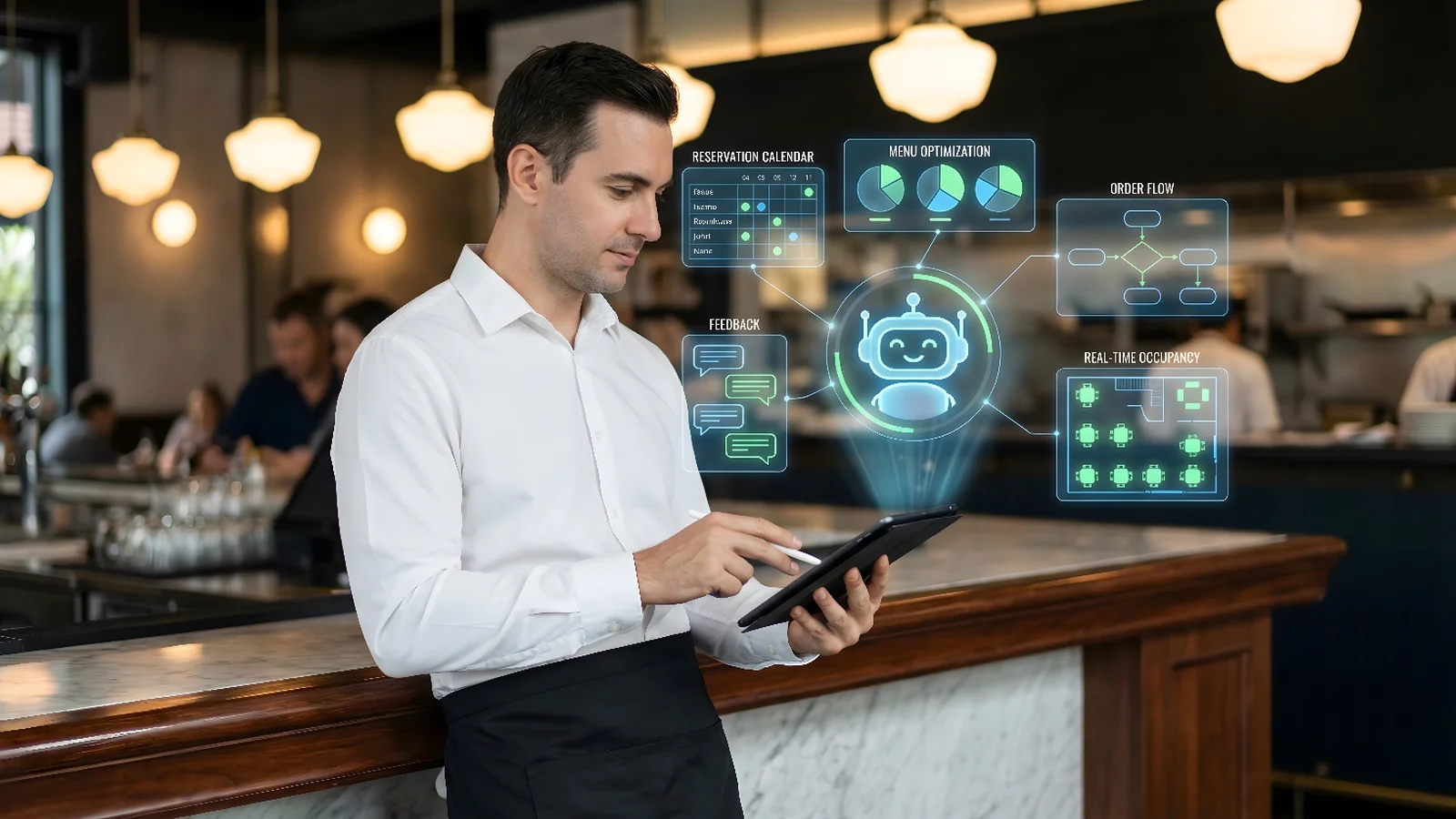
Restaurant365's mid-year survey of nearly 10,000 U.S. locations shows exactly how AI adopters are pulling ahead — creating what the company calls the "Restaurant Profitability Gap."
July 17, 2026 by Cherryh Cansler — Publisher, FastCasual.com
 ChatGPT
 Grok
Grok Perplexity
 Claude
Let's start with the obvious: Restaurants using AI are pulling ahead of those that aren't. If that headline alone doesn't shock you, I'm not surprised. We've been watching this trend build for a while now, but mid-year research from Restaurant365 puts real numbers behind the gap.
Its 2026 State of the Restaurant Industry Mid-Year Report surveyed over 420 operators representing nearly 10,000 U.S. locations spanning quick-service, fast casual, casual dining, fine dining, pizza and coffee concepts. The company is calling the divide it uncovered the "Restaurant Profitability Gap," and it's not just a catchy label; it's a measurable difference in how restaurants are performing depending on whether they've put AI to work in the back office.
So why exactly are AI-using operators pulling ahead? Below are four ways, according to the data.
1. They're cutting food costs
Among operators actively using AI, 61% reported reduced food costs. Restaurant365 found that reporting and analytics lead AI adoption industry-wide, followed by scheduling and inventory forecasting — tools directly tied to how operators manage food spend, waste and supplier decisions.
2. They're cutting labor costs
Sixty-two percent of AI-using operators reported reduced labor costs, and nearly one-third of AI users reported cost reductions of 6% or more overall. With scheduling among the top three AI use cases operators have adopted, the labor savings track closely with where the technology is actually being applied.
3. They're getting time back
A striking 88% of AI-using operators said the technology saves them time every week. In an industry where managers are stretched across scheduling, inventory, purchasing and payroll, that's not a small perk — it's time that can go back into running the floor or coaching staff.
4. They're moving faster on decisions
Restaurant365 CEO and co-founder Tony Smith said the operators seeing the strongest results aren't simply adopting AI tools. Instead, they're using them every day to make faster, better decisions and that habit is what's showing up in the bottom line. That daily habit is backed by scale: 62% of operators have now implemented or plan to implement AI in at least one back-office function, more than double the adoption level reported at the start of the year.
Of course, not everyone's on board yet. For operators still on the sidelines, the report points to a few consistent hesitations: Data privacy and security concerns (37%), doubts about how accurate AI outputs really are (34%), implementation cost (29%), and simply not knowing where to begin (18%).
An industry that's actually improving
The AI story doesn't exist in a vacuum. The report also found operators growing more optimistic about the second half of 2026. Yes, 83% saw food costs rise in the first half of the year, and 75% saw labor costs climb. Only 59%, however, expect labor costs to keep rising through year-end, the lowest share the company has recorded in three years of asking the question.
Operators are also leaning less on menu price hikes to protect margins. Just 52% raised prices in response to food inflation this year, down from 66% at the start of 2026, as more restaurants turn instead to inventory management, waste reduction and supplier optimization.
And traffic? It's actually rebounding. Only 28% of operators reported traffic growth at the start of the year. By mid-year, that jumped to 46%, and 62% now expect traffic to keep climbing through the rest of 2026.
Training, not just pay, is winning the retention fight
Staffing is still a headache: BLS data cited in the report puts restaurant turnover at about 74% as of March 2026, and Black Box Intelligence data shows non-management turnover at limited-service restaurants, while down seven percentage points year-over-year in Q1, remains a structural challenge for the industry.
But here's a shift worth noting: for the first time in Restaurant365's research, better training programs have overtaken pay increases as operators' top-cited retention strategy. Competitive pay still gets people in the door, but it's investment in training, culture and day-to-day experience that seems to be keeping them there.
Put it all together, and the "obvious" headline starts to make a lot more sense. AI adoption is accelerating, it's tied directly to lower food and labor costs and real-time savings, and it's happening at the same time operators are catching a break on traffic and inflation.
Restaurant365 expects the Restaurant Profitability Gap to become an increasingly important benchmark as more operators decide whether to close the gap or fall further behind it.
About Cherryh Cansler

Related Media
Featured Vendor

Ovation is a guest experience platform for multi-unit restaurants that starts with a 2-question survey to drive revenue, streamline guest recovery, and easily improve operations. Thousands of restaurants, including leading brands like Dave's Hot Chicken, use Ovation to get more feedback, recover guests in real-time, and improve.
Subscribe
Get the latest news and resources from Fast Casual.
Recent Posts



Recent Podcasts