Operations
Stop taking so long: 5 lessons from Bar Rescue's Jon Taffer
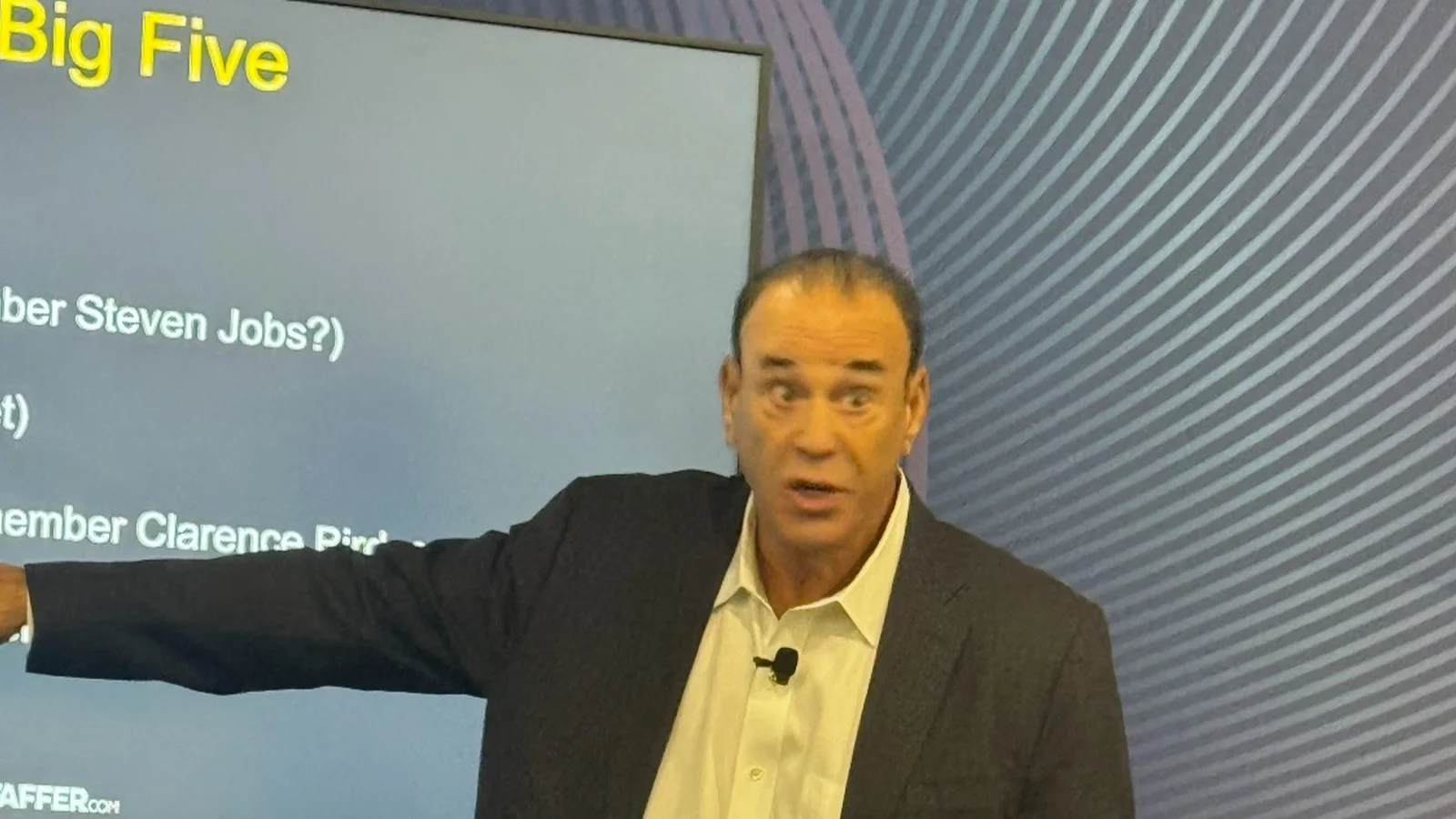
Here are five takeaways from Jon Taffer's keynote International Franchise Association event this week.
September 25, 2026 by Cherryh Cansler — Publisher, FastCasual.com
 ChatGPT
 Grok
Grok Perplexity
 Claude
Four days.That's how long Jon Taffer says it takes him to rescue a failing bar.
Not four weeks. Not four months. Four days.
He gets there, figures out what's wrong, studies the demographics and competition, develops the concept, orders the equipment, creates the recipes, gets the logo to the sign maker, trains the staff, starts construction and comes back with a finished operation.
And then he does it again.
So when Taffer stood in front of a room full of franchise operators Friday at the International Franchise Association show and asked, "What the hell takes you so long to do everything?" it wasn't exactly a throwaway line. It was the point.
Taffer, who's walked into 283 failing bars across 17 seasons of Bar Rescue, said it's the single biggest gap he sees between his process and how most operators run their businesses. Too many companies get stuck in a cycle of meetings, discussions, evaluations and scheduling another meeting to talk about what they just talked about.
His math is blunt: Implement something a week sooner, and that's a week of results you weren't getting before. Do it a month sooner, and it's a month. "Time is not our friend," he told the room. "It's our enemy."
He backed it up with a specific exercise he calls an acceleration project: take everything your business does — marketing, promotions, ordering, hiring — and find a way to do it just 10% faster across the board. Compound that speed over a year, he argued, and you're effectively running 13 months of revenue-generating activity against 12 months of expenses. That's the whole philosophy in one sentence: speed isn't a nice-to-have, it's free money you're currently leaving on the table by moving too slowly.
"Time is money," was the first of five lessons gave during his keynote.
That idea became the thread running through much of the talk: Stop making excuses, stop waiting for perfect conditions and start moving.
"If I can implement something a week sooner," Taffer said, "that's a week sooner of revenue. A week sooner of results."
His challenge to operators was to stop treating time like a neutral factor. It isn't. Every day spent waiting is a day you're not getting the revenue or results from whatever you're trying to accomplish.
Do that across the business, he said, and you effectively get 13 months of revenue from 12 months of expenses.
Here are four more takeaways from Taffer's keynote that restaurant operators can put to work.
2. Excuses are the common denominator of failure
Taffer's second big message was even more direct: Stop blaming everyone else.
He recalled an episode of Bar Rescue in Detroit where he asked a struggling bar owner why she was failing.
Her answer? The euro in Greece. After more than 100 episodes, Taffer said he realized he'd never had an owner immediately tell him, "I'm failing because of me." There was always something else to blame.
Taffer argues excuses are dangerous because they remove the incentive to change. If the problem is the economy, the weather, the competition or something happening halfway around the world, then there's nothing you can do about it. But if the problem is your decision? Now you have something to work with.
For operators, that means looking first at the things you actually control — your marketing, your service, your pricing, your people, your concept and your execution.
3. Your product isn't the food. It's the reaction.
Taffer calls it Reaction Management, and it's one of the more interesting concepts he presented.
The food isn't really the product, he said. It's the vehicle. The product is the customer's reaction to it, which is why Taffer doesn't like restaurant managers sitting in offices. He wants them watching guests.
What happens when someone walks through the door? What happens when they take the first bite? Are they smiling? Looking around? Connecting with the experience?
Those reactions tell you something.
Taffer believes businesses that create the strongest customer reactions ultimately win.
For restaurants, that means looking beyond whether the food came out correctly and asking whether the entire experience made the guest feel something. A competitor can copy a sandwich; copying a reaction is a lot harder.
4. You don't have an expense problem. You have a revenue problem.
This was another classic Taffer statement. Operators complained about rent, labor, marketing and other costs.Taffer's response: Focus on revenue.
"If your revenues went up 30%, would you ever have an expense problem anymore?" he asked.
His point wasn't that operators should ignore expenses. It's that constantly squeezing costs doesn't solve a business that isn't generating enough sales.Taffer said his own career advancement came from focusing on revenue. He'd be sent into a property, increase revenue and then get moved to a bigger operation.
His message to franchise operators was that every franchise is, first and foremost, a sales organization.
And that means marketing has three jobs:
- Get new customers.
- Increase frequency.
- Increase spend.
If you're not actively working on all three, Taffer argues, you're not really marketing.
5. Hire for personality. Teach the process.
Taffer also challenged the idea that the best restaurant employee is necessarily the person with the longest resume. He'd rather have someone with the right personality who can be taught the operation than someone with years of experience who doesn't connect with customers.
You can teach recipes, systems and how to use a POS, but teaching someone to care about people is a different proposition.
Taffer believes personality drives connectivity, and connectivity drives results. That puts more pressure on the hiring decision itself. Instead of asking only, "Can this person do the job?" operators should also be asking, "Will this person make our customers feel good?"
The bigger takeaway: Stop working in the business long enough to work on it.
Taffer eventually brought all of these ideas back to one larger challenge: Operators spend so much time working in their businesses that they don't spend enough time working on them.
He suggested taking a day to step away from the spreadsheets and daily fires. Look at the competition, marketing, promotions and your customer reactions. Look for the things that aren't working and the things that could be moving faster.
Because Taffer's four-day Bar Rescue turnaround isn't really about renovating a bar in four days. It's about making decision and eliminating excuses. It's also about understanding that while you're sitting in another meeting talking about what you're going to do, the clock — and the opportunity to make money — is still running.
About Cherryh Cansler

Related Media
Featured Vendor

Momos Guest AI is the leading AI platform built for multi-location brands. We help restaurants, QSRs, retail, and hospitality teams deliver better guest experiences across every location by unifying customer service, operations, and marketing into a single end-to-end platform - turning one-time customers into repeat guests.
Subscribe
Get the latest news and resources from Fast Casual.
Recent Posts