Technology
Why Slim Chickens put its menu on Samsung TV home screens
Slim Chickens is piloting delivery ordering from Samsung TVs at its nine Northwest Arkansas restaurants. Ben Turner, vice president of brand performance, explains why the chain started at home, how orders reach crews and what would lead to expansion.
November 20, 2026 by Amy Sorter — Writer and Editor, Connect Media
 ChatGPT
 Grok
 Perplexity
 Claude
Many people rely on their televisions to stream shows, play games, listen to music or audiobooks, and even use them for home security.
Slim Chickens is betting that people might be willing to use their Samsung TVs to order food for delivery.
The Fayetteville, Arkansas-based chain, which has more than 300 locations, launched such a pilot on Nov. 6 at all nine of its Northwest Arkansas restaurants. The company will review the results at the end of the quarter to determine whether and how to expand, Ben Turner, vice president of brand performance, said in an email interview with FastCasual.
"We wanted to start here at home, learn how guests actually use it, and let the results tell us where to go next," he said.
Getting the chicken
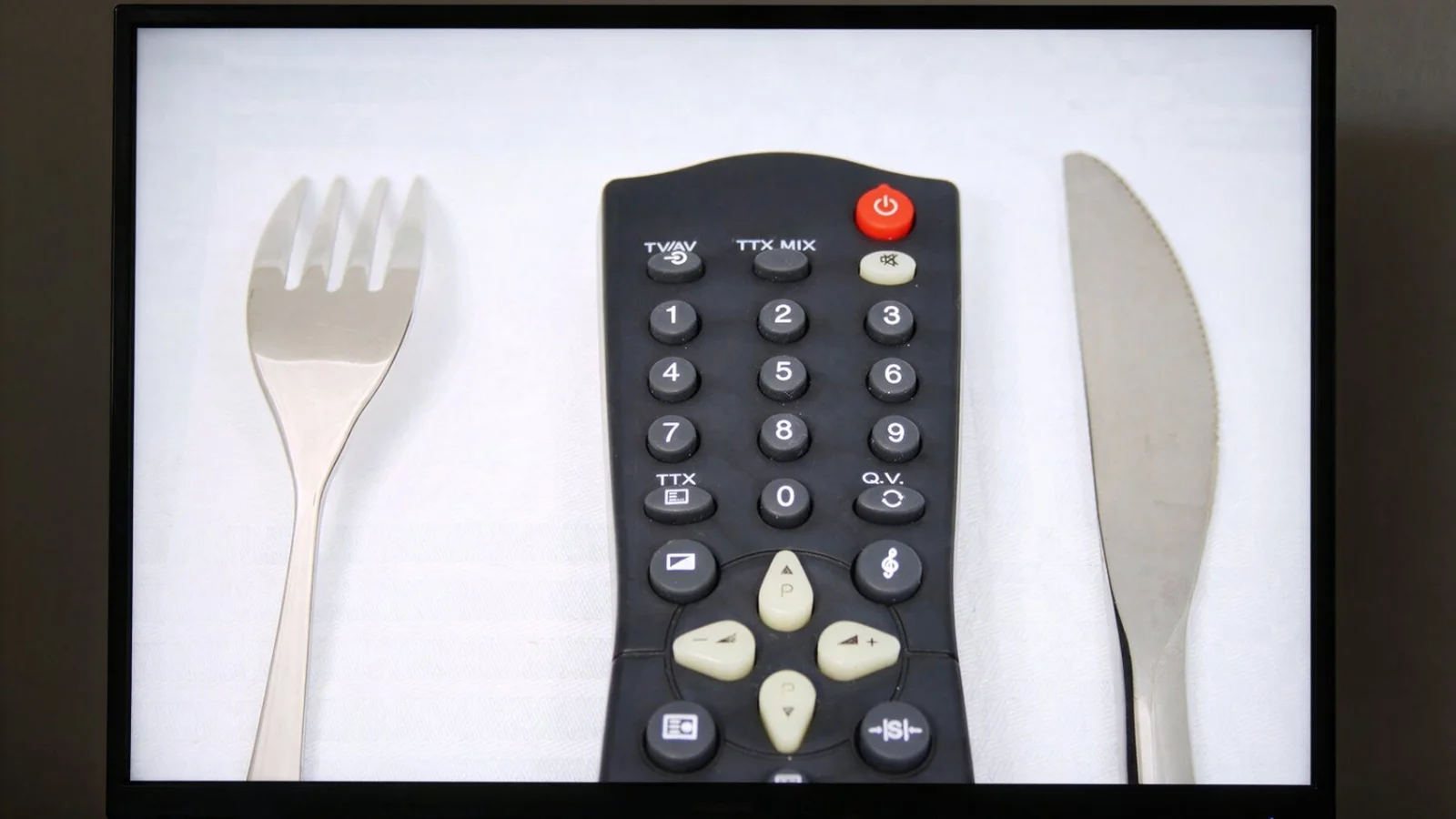
Interested customers in northwest Arkansas can find Slim Chickens on their Samsung TV home screens, use their remotes to create an order and check out from their televisions. Customers receive an immediate order confirmation, while the chain's customer service process handles any problems.
The full menu is available, with the same items, customizations and prices as Slim Chickens' app and website. Once placed, orders are handled with the same delivery setup the chain uses for its app orders.
The ordering technology runs through klyq, a shoppable streaming platform from NBTV, and Gett, a direct-to-merchant ordering network. To participate, guests must create an account on klyg's website using a payment card and a delivery address. Turner said that klyg is on more than 80 million Samsung TVs nationwide.
"Here in northwest Arkansas, a lot of households have a Samsung TV, so it's a meaningful audience for a test line like this," he said.
Starting on the home front
Turner said that klyg and Gett came to Slim Chickens with the idea. The duo wanted a brand that could help prove the concept, and Slim Chickens was interested in becoming an early adopter of a new ordering method.
"It works for both sides. They get a real-world partners and we get to learn alongside them," Turner said.
Northwest Arkansas was an obvious choice for the pilot because of Slim Chickens' headquarters location. The proximity means nearby teams can test the system, watch for issues and fix them quickly.
"It's also a community that's always been great about trying new things with us," Turner said.
Slim Chickens and Samsung aren't the only ones interested in TV-driven orders. LG and SoundHound AI plan to bring restaurant ordering to about 20 million LG Smart TVs, with a launch expected in December, FastCasual reported earlier this month.
But Slim Chickens decided not to wait for the rest of the industry to catch up. The test was low-risk, so it made sense to move early and learn fast.
"People are on their couches, watching the game or a show, and they're hungry," he said. "That's a natural moment to order."
No change for crews
On the back end, the channel is structured so no additional kitchen work is added.
"To our crews, a TV order looks just like any other digital order from our own app or website, so there's no new training, no new equipment and no change to how they work," Turner said.
This isn't to say that the set-up didn't come without a plateful of challenges. Before the launch, test orders were placed with less-than-stellar results concerning the cart, the payment process and some menu details.
But such kinks were to be expected, Turner said.
"The klyq and Gett teams were fantastic and fixed everything quickly, and by launch the orders were going through smoothly," he said.
Measuring success
While Turner did not share early results, he said the channel has been ideal for tracking a customer's path from seeing Slim Chickens on TV to delivery.
"For us, success is new guests, and guests ordering directly from us instead of through a marketplace," he said.
"If it shows it can bring in incremental orders at a cost that makes sense for our franchisees, it's an easy conversation about taking it to more markets."
Turner suggested that other brands considering a "made-for-TV" strategy should ensure that strong restaurant processes, including ordering, are already in place.
"If it runs through the ordering systems you already use, your teams barely notice the change," he said.
He also recommended that operators test the technology on themselves, as customers, before going live with it.
"And go in knowing what you're trying to learn, so the results actually tell you something," he said.
More Americans are watching TV while eating delivery dinners (DoorDash). Additionally, 65% of consumers purchase something after seeing a TV ad, and 66% report shopping online while watching TV (tvScientific). In light of this, Turner said that Slim Chickens wanted to provide their customers with another outlet for ordering.
"We want TV ordering to feel just as reliable as walking into one of our restaurants," he said.
About Amy Sorter

Amy W. Sorter is an award-winning journalist, copywriter and content producer. Sorter has generated quality articles, blogs and thought leadership pieces for multiple industries during her many decades as a writer. Her byline has appeared in local and national publications including the American Business Journal, Connect CRE, Bankrate, CURE Magazine and the Dallas Morning News.
Related Media
Food & BeveragePresented ByOracle
Subscribe
Get the latest news and resources from Fast Casual.
Recent Posts
Recent Podcasts