Operations
Why Ruby Jean’s founder refuses to stay quiet about this Missouri ballot measure
The 2025 map would divide much of Kansas City among three districts, and one of those dividing lines follows Troost, the street long associated with racial segregation in the city. Ruby Jean's sits on Troost.
November 2, 2026
 ChatGPT
 Grok
 Perplexity
 Claude
Most restaurant owners I know would rather talk about almost anything than politics. Margins are thin, and nobody wants to lose a regular over a yard sign.
Chris Goode went the other way.
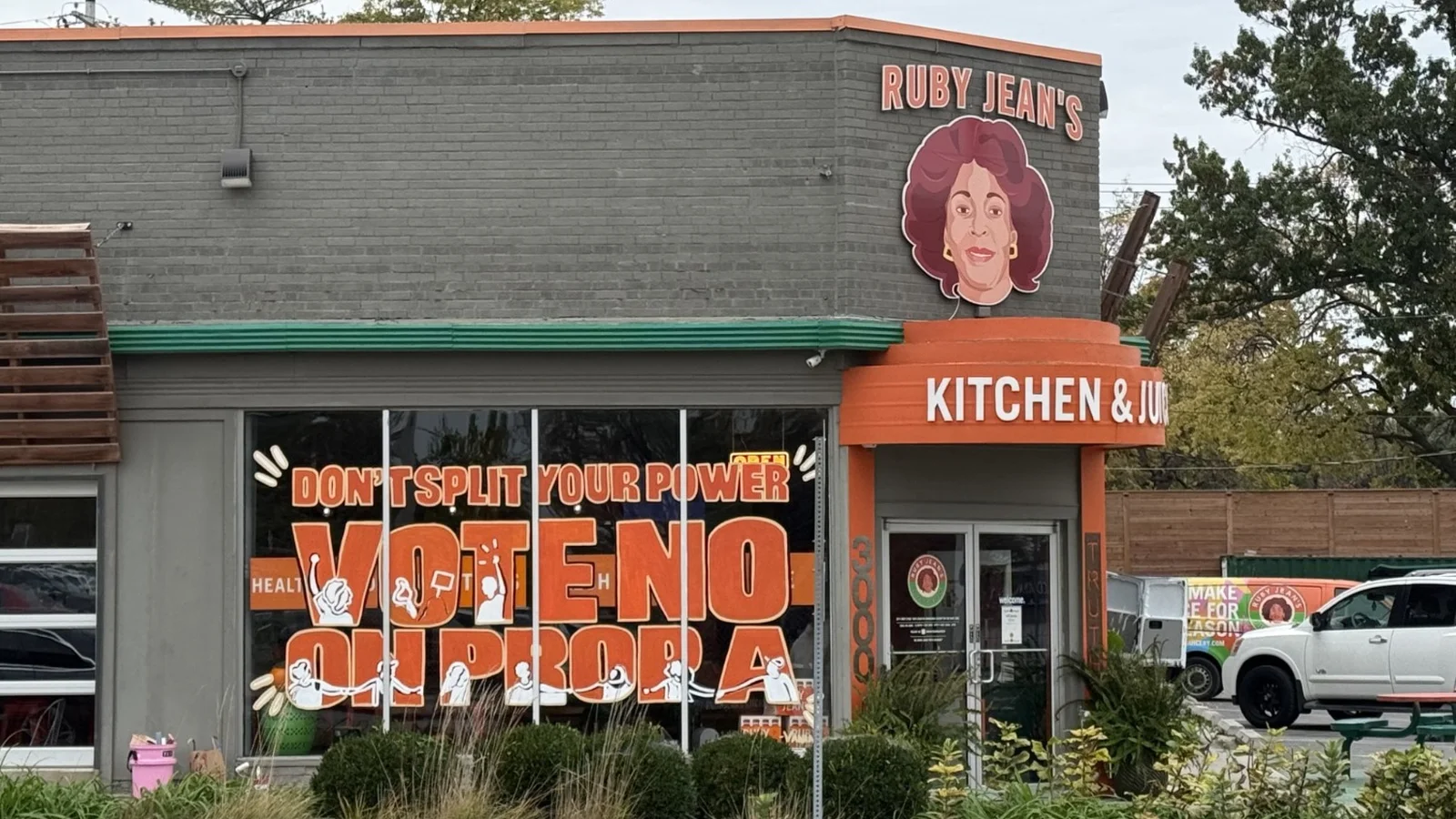
The founder of Kansas City-based Ruby Jean's Juicery has turned the storefront windows of his Troost Avenue location into a mural, created by artist Vania Soto, urging Missourians to vote no on Proposition A, which is on the statewide ballot Tuesday.
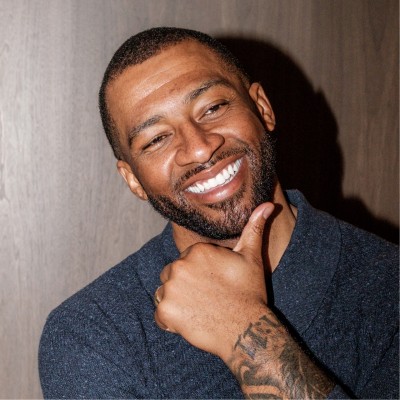 |
| Ruby Jean's founder Chris Goode |
Prop A asks voters whether to approve the congressional map Missouri lawmakers drew in 2025.
A "yes" vote adopts the new map. A "no" vote keeps the boundaries drawn in 2022. Either way, nothing changes for this year's election. After a long legal fight, the U.S. Supreme Court ordered Missouri to use its 2022 map in November, so Prop A decides which lines apply starting with the 2028 election, according to the Missouri Independent.
States typically redraw congressional maps once a decade, after the census. Missouri's 2025 redraw came in the middle of the decade, amid a national fight over control of the U.S. House. Republicans pushed new maps in states including Texas, while Democrats sought advantages in states including California, according to the Missouri Independent.
The 2025 map would divide much of Kansas City among three districts, and one of those dividing lines follows Troost, the street long associated with racial segregation in the city. Ruby Jean's sits on Troost.
"My grandma's house taught me the front porch is where a neighborhood talks to each other. Our storefront is our front porch," Goode said in an email interview with FastCasual. "When the people's power is on the ballot, staying quiet felt like a choice too."
Goode founded the business in 2015 and named it after his grandmother, Ruby Jean. He opened the Troost location in November 2017. (He has also pushed to rename the street "Truth," which is why his LinkedIn post this week says Ruby Jean's will have been on "TRUTH Ave" for nine years on Nov. 11.)
"We've spent 11 years building health and opportunity on the East Side, and you can't fix health without fixing who gets represented," he said in the interview.
What about losing customers?
Asked whether he was concerned about losing customers in a Republican-leaning state, Goode said he was not.
"Not really. Everyone's welcome at our counter, whatever they vote. If anything, I think it connects us with people who believe in fai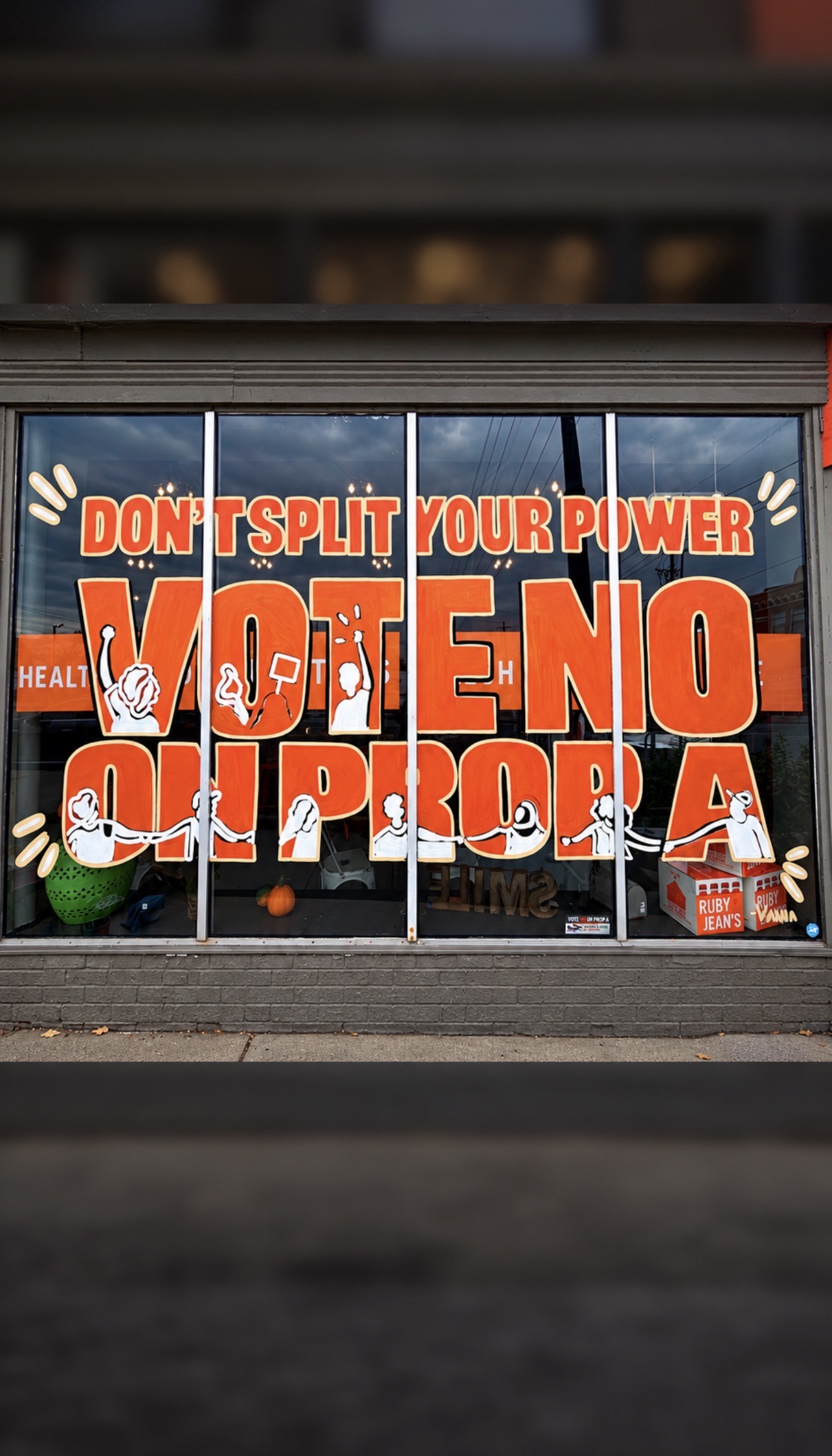 ness," Goode said. "This isn't about party, it's about whether a community gets to speak with one voice. Republicans have opposed this map too."
He is confident that his customers know what the brand stands for.
"We've always been a story-led brand that shows up for the neighborhood, and I'd rather lose a sale than lose our integrity," he said. "We blend our smoothies, not our belief system."
Customer response
Goode said the response on social media has been positive.
"On socials, people have been very supportive, and some even say they'll make it a point to stop by now," Goode said in the interview. "Others are taking pictures and resharing the sentiment."
Supporters of the map see it differently. Michael Hafner, a spokesman for Put Missouri First, which backed the 2025 map, told the Missouri Independent, "Prop A deserves Missourians' support because it delivers a practical, commonsense map that respects more community boundaries throughout our state."
Supporters also note that in May the Missouri Supreme Court upheld the map against a separate constitutional challenge over compactness and population equality.
The vote itself happened because People Not Politicians, the group Goode thanked in his LinkedIn post, gathered more than 300,000 petition signatures to put the map before voters.
In his LinkedIn post, Goode tied the decision to the role small businesses play in their neighborhoods.
"Not many small businesses take a public stand, and I understand why. Margins are thin and nobody wants to lose a customer," he wrote on LinkedIn. "But I've always believed business and service are one existence. Black-owned shops, barbershops and corner restaurants have been where communities organized for generations. Our real estate is a tool, and so is our voice."
He also told me that small businesses are part of a neighborhood's infrastructure.
"Using your platform doesn't have to mean picking a party," he said. "It can just mean standing up for your community's voice."
Related Media
Subscribe
Get the latest news and resources from Fast Casual.
Recent Posts
Recent Podcasts