Food & Beverage
How Joe & the Juice is scaling without losing brand identity
Joe & the Juice combines aggressive U.S. expansion plans with maintaining the identity that factored into its growth.
June 30, 2026 by Amy Sorter — Writer and Editor, Connect Media
 ChatGPT
 Grok
Grok Perplexity
 Claude
 |
| Jorrie Bruffett, Courtesy Joe & the Juice |
Denmark-based Joe & the Juice is adding 100 U.S. corporate-owned locations within 18 months by pushing deeper into markets, including Texas, Florida, New Jersey and Washington with more to come. While rapid growth is the goal, maintaining the brand's distinct atmosphere and customer experience is just as important.
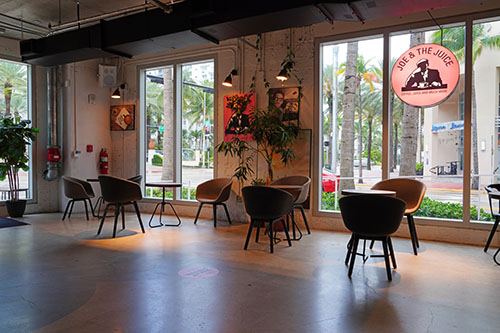
"The physical environment is a mix of Scandinavian design and urban cool that immediately separates us from other chains," Jorrie Bruffett, Joe & the Juice's U.S. managing director, told FastCasual.
Healthy beverages are in
Smoothies and health-focused beverages were once niche drinks, confined to fitness centers and health-food stores. That all changed during the 2000s. As consumers focused on their health, items including "green" smoothies (with leafy vegetables) and protein-based drinks entered the mainstream.
According tothe National Restaurant Association, popular beverages include energy drinks, fermented and gut-friendly offerings and personalized hydration. The health drinks market size is expected to increase from $141.8 billion in 2026 to $200 billion by 2031, at a CAGR of 7.1%.
An EY survey revealed that wellness has become a consumer expectation which, in turn, is impacting drink ingredients and nutritional aspects.
Additionally, "97% of U.S. customers have engaged in health and wellness behaviors over the past two years," the EY survey reported.
"Those behaviors now show up clearly in beverage choices."
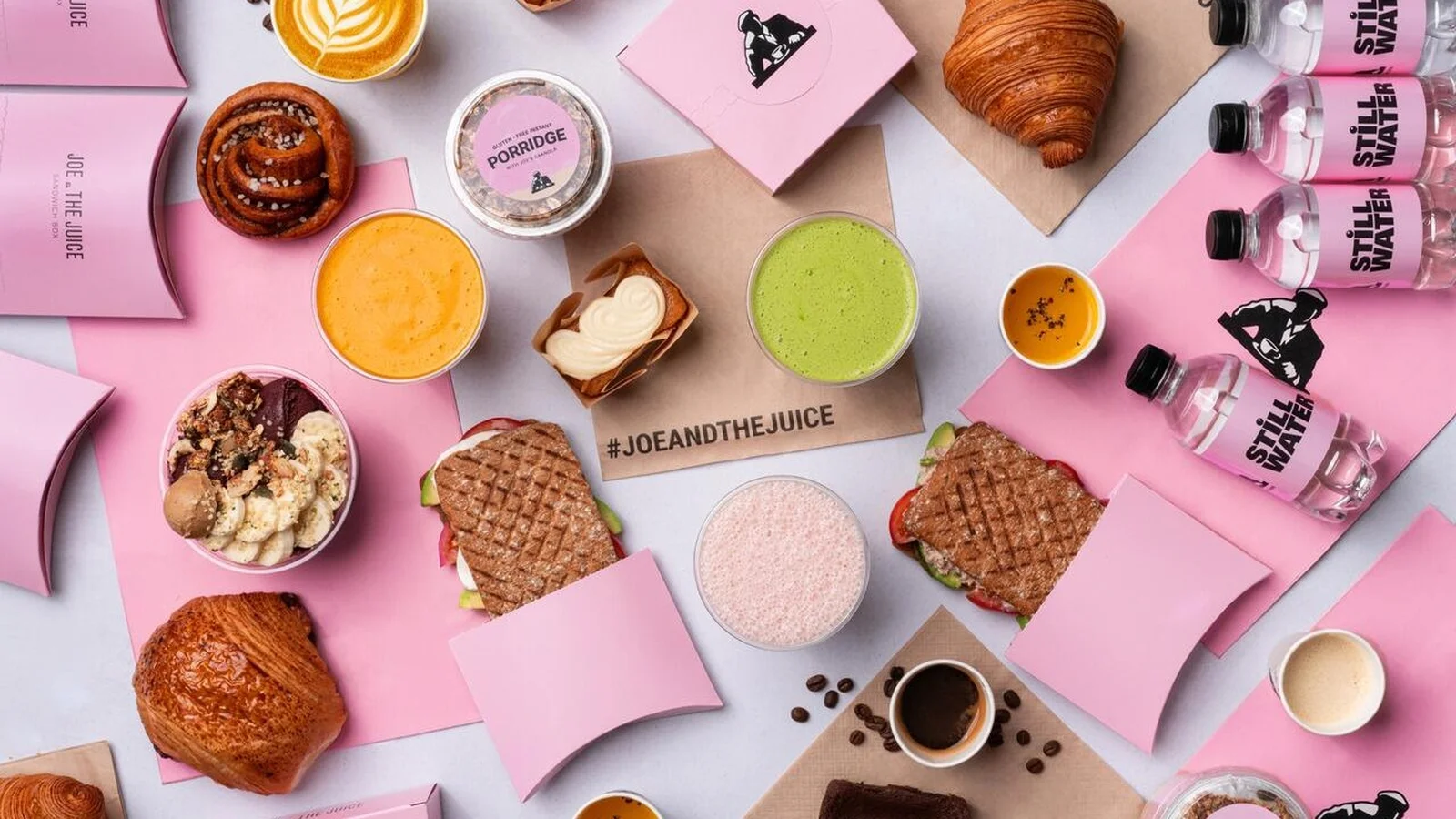
One of Joe & the Juice's directives is ordering drinks that support consumers' desire for a healthier lifestyle. The beverages also need to taste good.
"Our Tunacado remains a favorite, as well as our protein smoothies and juices including the Feel Good," Bruffett said.
Just as important as the feel-good/taste-good aspect of Joe & the Juice's menu items is the environment in which they're consumed.
Atmosphere from the outset
According to Bruffett, consumers are calling for high-quality, fresh and convenient food from brands with which they align. Joe & the Juice is focused on meeting that need.
Founded in Copenhagen in 2002 by karate athlete Kaspar Basse, Joe & the Juice created its identity around tasty smoothies, sandwiches and coffee. And taking a page from the Starbucks brand strategy book, the chain threw in ambiance as a differentiator, blending Scandinavian-inspired design, upbeat music and energetic customer interactions into a lifestyle-focused concept.
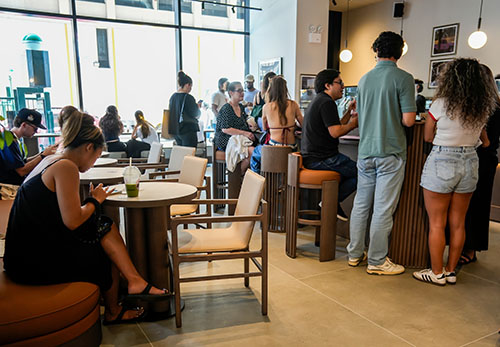
Today, that optimistic environment remains key as the better-for-you segment grows increasingly crowded. The customer experience begins the moment guests enter the store, from music curated to fit different times of day to enthusiastic greetings from employees known internally as "juicers."
"Your experience at Joe should be fun, engaging and leave you feeling like you've done something good for yourself," Bruffett said.
The scaling challenge
 |
| Joe & the Juice, Miami, Shutterstock |
That emphasis on energy and upbeat environment presents both an opportunity and a challenge as the company expands across diverse U.S. markets.
Joe & the Juice operates in locations ranging from suburban Chicago to Northern California, generating an AUV between $2 million and $4 million.
Bruffett said that the company is leaving dense urban environments to target active suburban communities and high-traffic retail corridors, shopping centers and mixed-use developments where customers already live, work and shop.
"The ideal is where there is high traffic flow," Bruffett said.
"This can include malls, shopping centers, city centers and transportation hubs."
As the brand grows, executives are focused on maintaining consistency across locations while still allowing individual stores to reflect local communities.
Bruffett said core design elements and service expectations are standard throughout the system. At the same time, artwork and certain decorative features are customized to create a more localized connection with the community.
"Additionally, the T-shirts our juicers wear are localized with limited runs from the opening of the store and special local events," she said.
The balancing act between rapid expansion and operational consistency has occasionally created growing pains.
"Recent opening demand has been so high in some areas, we've not been able to deliver a customer experience we're happy with," Bruffett said.
To address those issues, the company has made operational adjustments to improve service speed and execution while maintaining the brand's experiential focus.
Measuring success
 |
| Joe & the Juice, New York City, Shutterstock |
Like many restaurant operators, Joe & the Juice measures success via metrics, including same-store sales and foot traffic. The company also closely monitors customer reviews, operational efficiency and employee satisfaction.
"We look at the happiness of our teams and determine how we can continue keeping their spirits high," Bruffett said, noting that employee engagement directly impacts customer experience.
As Joe & the Juice continues its aggressive U.S. growth strategy, Bruffett said that the priority is not reinventing the brand but reinforcing the identity that helped differentiate it in the first place.
"We're not focused on re-invention, but on doubling down on staying true to who we are, which is a Danish brand that was founded on being cool and providing healthy alternatives in a quick, energetic environment," she said. "If we keep our focus there, then we will keep our edge."
About Amy Sorter

Amy W. Sorter is an award-winning journalist, copywriter and content producer. Sorter has generated quality articles, blogs and thought leadership pieces for multiple industries during her many decades as a writer. Her byline has appeared in local and national publications including the American Business Journal, Connect CRE, Bankrate, CURE Magazine and the Dallas Morning News.
Related Media
Food & BeveragePresented ByOracle
Subscribe
Get the latest news and resources from Fast Casual.
Recent Posts