Automated Retail & Kiosk Innovation Show
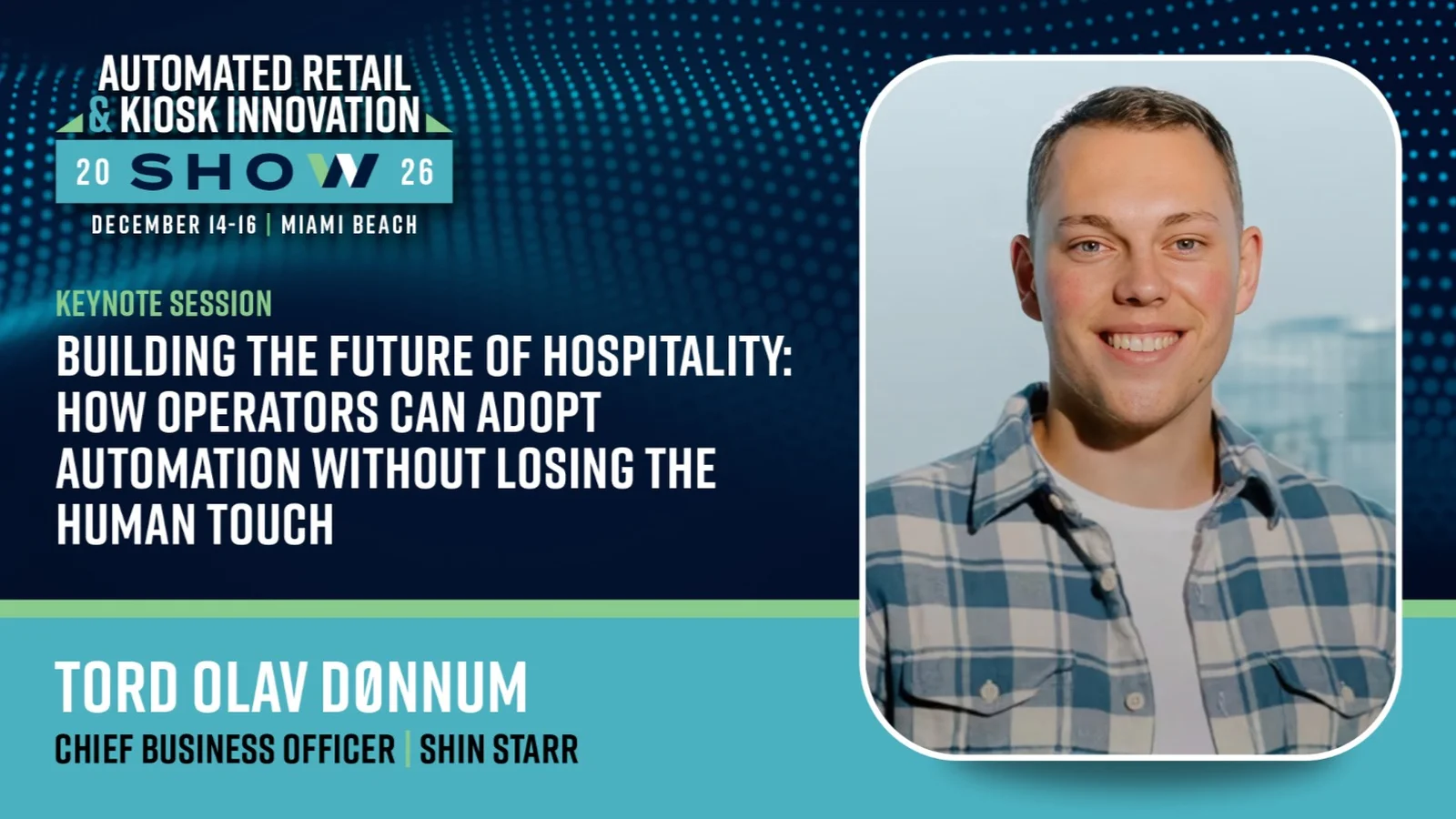
Tord Olav Dønnum on the future of autonomous foodservice
Tord Olav Dønnum discusses how robotics, automation and artificial intelligence are reshaping foodservice operations and how autonomous kitchens can help operators improve profitability while preserving the human side of hospitality.
June 19, 2026 by Richard Slawsky — Editor, Connect Media
 ChatGPT
 Grok
Grok Perplexity
 Claude
Tord Olav Dønnum, chief business officer of Shin Starr Presents, will be among the featured speakers at the 2026 Automated Retail & Kiosk Innovation Show, scheduled for Dec. 14-16 in Miami Beach, Florida.
ARKI is an annual conference and trade show that brings together leaders in self-service technology, automated retail, kiosks, smart stores, unattended foodservice, vending and digital customer engagement. The event features educational sessions, keynote presentations, networking opportunities and an exhibition floor showcasing the latest innovations in kiosks, robotics, AI, payments, digital signage, micro markets and autonomous retail.
A Norwegian entrepreneur based in Silicon Valley, Dønnum joined Shin Starr after building and exiting a technology venture focused on connecting startups with investors. Shin Starr's autonomous kitchen technology uses robotics to move ingredients from refrigerated storage through the cooking process, producing freshly prepared meals with minimal labor while maintaining consistency and reducing food waste.
The company's OLHSO brand has already demonstrated the concept through autonomous Korean barbecue food trucks and is now targeting airports and other high-traffic venues.
While automation often sparks concerns about labor displacement, Dønnum argues that the technology should be viewed as a tool to enhance hospitality rather than replace it. He believes the industry's future depends on finding a balance between robotics and human interaction, particularly as operators face rising labor costs, shrinking margins and growing demand for fresh food around the clock.
During a recent interview with Vending Times, Dønnum discussed how robotics, automation and artificial intelligence are reshaping foodservice operations and why he believes autonomous kitchens can help operators improve profitability while preserving the human side of hospitality.
Q: How did you become involved with Shin Starr?
Dønnum: My background is in entrepreneurship and technology startups. I came to California to attend Berkeley, but left to build a capital-raising platform that ultimately facilitated about $10 billion in transactions. While supporting founders and funds with their fundraising efforts, I hosted a dinner for founders and investors where I introduced Shin Starr founder Jay Shin to automated retail entrepreneur Gower Smith. Their connection led to an investment, and I became involved in helping the company raise capital and build its U.S. strategy. Eventually I joined as chief business officer because I was impressed with both the technology and the vision.
Q:What attracted you to autonomous foodservice?
Dønnum: I've always enjoyed building physical products. What impressed me about Shin Starr was its ability to rethink the restaurant from the ground up. The company developed a robotic kitchen that takes raw ingredients, cooks meals autonomously and delivers consistent results in about four to five minutes. The technology isn't just about automation; it's about providing fresh food, reducing waste and creating a model that can operate around the clock.
Q:Many people focus on the robotics. What do you think they're missing?
Dønnum: Consumers don't care about robotics nearly as much as they care about food quality and convenience. The technology is important, but the real question is whether the food tastes great every time. Consistency is one of the biggest challenges in foodservice. Whether someone visits us in California, Kentucky or somewhere else, the experience should be the same. That's where automation helps.
Q:Your keynote addresses labor challenges. How do you balance automation with the human side of hospitality?
Dønnum: We automate the cooking process, not the customer relationship. Our goal is to free employees from repetitive back-of-house tasks so they can focus on guests. Restaurants succeed because of human interaction. Customers want attention, answers and service. Automation should support those interactions, not replace them.
Q:What's the biggest lesson you've learned while scaling the business?
Dønnum: Everything takes longer than expected. There are regulatory requirements, permitting processes and operational challenges, especially in locations such as airports. The key is maintaining food quality and consistency while navigating those hurdles. If you can do that, the effort is worthwhile.
Q:Do you see Shin Starr as disrupting the restaurant industry?
Dønnum: I see us helping the industry evolve. Restaurants face rising labor costs and shrinking margins. We're creating a more efficient operating model that can improve profitability while delivering better food and a better customer experience. The objective isn't disruption for its own sake. It's helping restaurants adapt to new realities.
Q:Where do you see foodservice automation heading over the next five years?
Dønnum: The industry will continue to automate because the economics demand it. The challenge is making sure automation enhances the customer experience rather than eliminating the human element. We want to demonstrate that technology can create a better restaurant, not simply a more automated one.
Q:Where do you see the greatest opportunity for autonomous restaurants?
Dønnum: Airports are a major opportunity. Many airport concessions close during overnight and early morning hours, leaving travelers and airport workers with limited options. Autonomous restaurants can provide fresh meals 24/7 and fill those gaps without directly competing with existing operators. We see airports as one of the strongest use cases for our technology.
Q:What do you hope attendees take away from your keynote?
Dønnum: I want people to feel optimistic about the future of restaurants. Automation doesn't have to mean removing people from the experience. If implemented correctly, robotics can help operators maintain quality, improve consistency and create a more sustainable business model while preserving the hospitality that customers value.
Q:If you could have dinner with anyone, who would it be?
Dønnum: David Attenborough. I've always admired his ability to make people care about subjects they might otherwise overlook. His storytelling has inspired generations, and that's a skill every entrepreneur should appreciate.
Q:Any final thoughts?
Dønnum: We're a diverse team with roots in Norway, Korea, New Zealand and the United States, but we're united by a common goal: creating a healthier, more consistent and more profitable restaurant ecosystem. That's what drives us every day.
Upcoming Events
Automated Retail & Kiosk Innovation Show
December 14-16, 2026 | Miami Beach, FL
Explore the latest breakthroughs in automated retail, interactive kiosks, and unattended technology — and unlock new ways to serve customers and grow revenue.
View AgendaRegister NowAbout Richard Slawsky
In addition to writing, Slawsky serves as an adjunct professor of Communication at the University of Louisville and other local colleges. He holds both a Bachelor’s and a Master’s degree in Communication from the University of Louisville and is a member of Mensa and the National Communication Association.
Related Media
Food & BeveragePresented ByOracle
TechnologyPresented ByOracle
Subscribe
Get the latest news and resources from Fast Casual.
Recent Posts

Recent Podcasts