Operations
The foundation for Rooted: Seven ingredients, simplicity and trust
Rooted founder Lily Rivkin built a fast-casual concept around simplicity and trust. Its seven-ingredient rule keeps food and operations streamlined, while transparency and consistency built customer loyalty and is fueling expansion from Flatiron to the West Village.
October 7, 2026 by Amy Sorter — Writer and Editor, Connect Media
 ChatGPT
 Grok
Grok Perplexity
 Claude
 |
| Lily Rivkin, courtesy of Rooted |
Lily Rivkin acknowledges she isn't trying to build New York's coolest restaurant. Instead, "we're trying to be the restaurant you don't think about," Rivkin told FastCasual in a Zoom interview.
That may be a questionable ambition for a young restaurant brand. In this case, it is the foundation of Rooted, the fast-casual concept Rivkin launched as a pop-up in Manhattan's Flatiron district.
Rikin's goal from the start was to create the restaurant equivalent of a paper-bag lunch or a grocery-store roast chicken: simple, dependable and good enough that customers don't have to think twice about what they're ordering or eating.
That philosophy has generated a 73% repeat rate. And following the success of the Flatiron locale at 38 E. 23rd St., a second location in Manhattan's West Village is on track for a fall opening.
Rivkin, who previously worked in finance and technology after earning a history degree from Yale University and an MBA from the Wharton School of the University of Pennsylvania, built Rooted around two principles: simplicity and trust.
The 7-ingredient standard
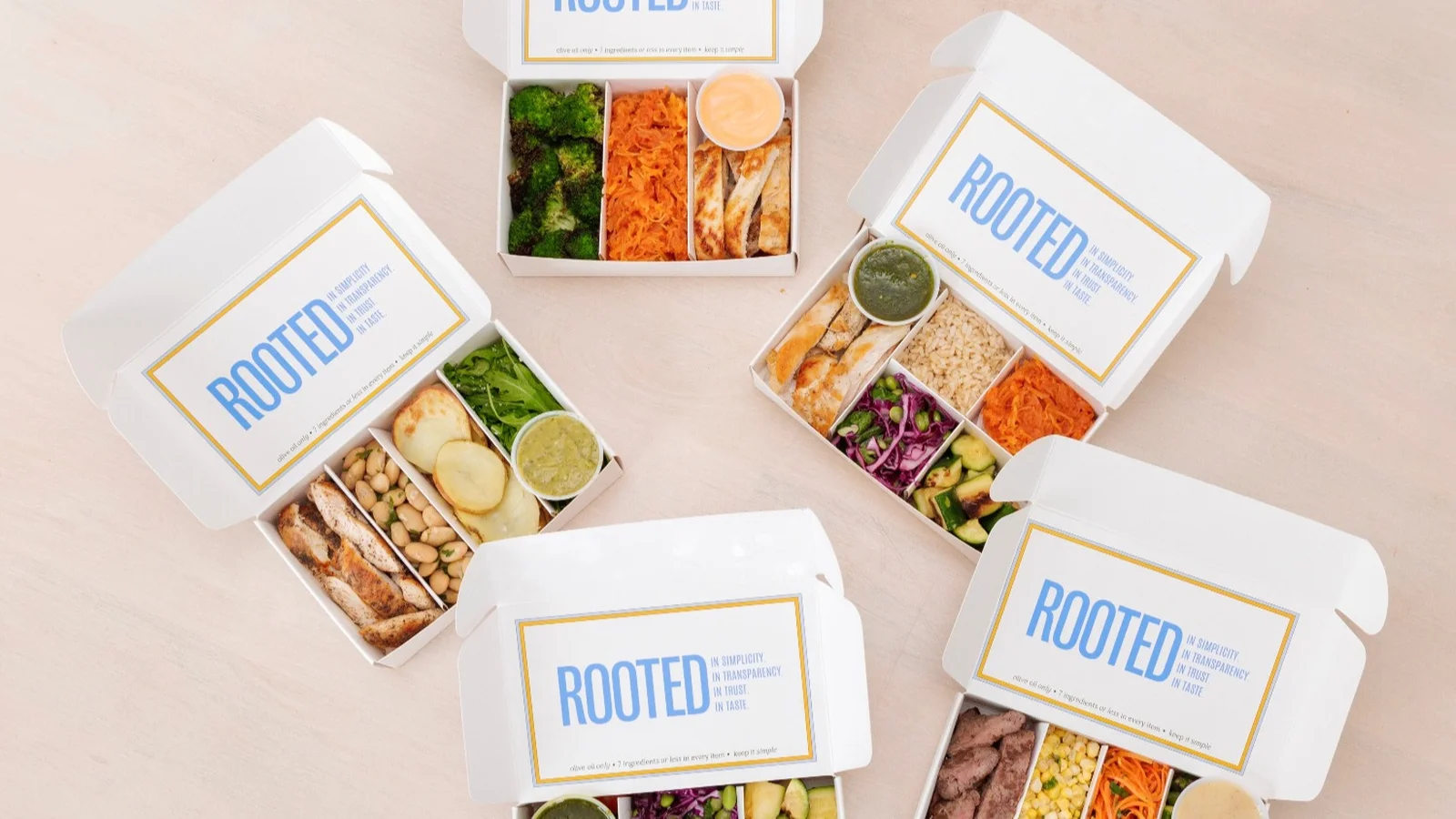
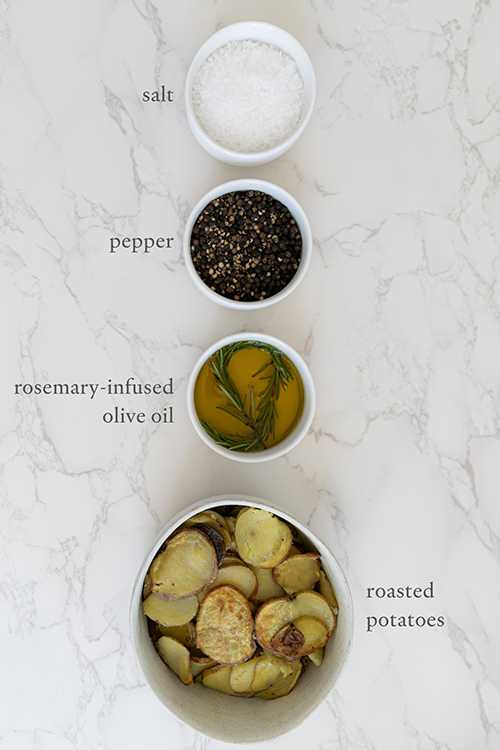
The foundation of the Rooted philosophy is that no food item or sauce would contain more than seven ingredients.
Part of the reasoning was personal. When people cook at home, they generally don't work with long ingredient lists.
"Seven felt like a round number where we could still create some deliciousness and stay true to our simplicity," Rivkin said.
The rule is also practical. Fewer ingredients mean fewer recipes for employees to memorize, simpler inventory management and easier ordering.
Rivkin and her staff work on a recipe until it meets that standard. For example, a barbecue sauce was proving too difficult to create without adding a boatload of ingredients or sugar.
The solution? A honey-mustard sauce.
"It's two ingredients, but it gives the same feel as a barbecue sauce," Rivkin said.
That willingness to change course is part of Rivkin's broader approach to running the business. Her finance background taught her to look at the numbers behind every decision, including customer acquisition costs, food and labor costs and rent. Her technology experience taught her to think about Rooted as a product and an end-to-end operation.
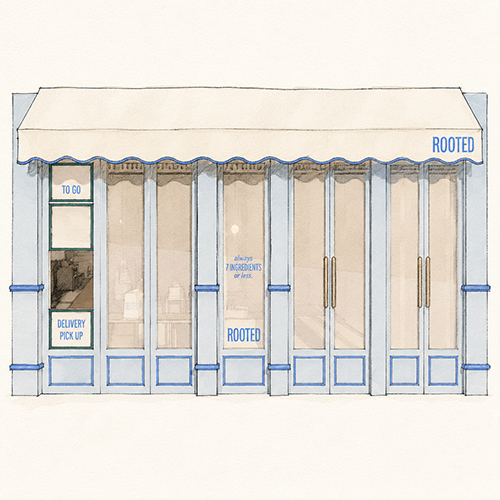 |
| West Village Storefront, courtesy of Rooted |
So even if she wants to put a particular ingredient on the menu, it needs to pencil out economically.
"I would love to have a tahini, but the quality of tahini I want to source just doesn't make financial sense right now," Rivkin said.
Trust as a business strategy
Rivkin acknowledged "trust" can sound gimmicky. But again, there is a practical purpose for the philosophy. It's an extension of how people eat at home.
People who cook for themselves know what's in the food. They know that ingredients aren't quietly substituted. That transparency is important, especially for customers with dietary concerns or food allergies.
"When I find a restaurant that provides transparency, I know I can turn off my brain after a long day at work and not think about it. I trust that the ingredients are good, and that I'll feel good after eating the food," Rivkin said.
That trust appears to be translating into behavior, as customers value predictability as much as the food itself.
"Trust turns into habit, and the economics follow," she said.
It also changes the relationship between the restaurant and its customers.
Rivkin pointed to a customer who works nearby and comes into Rooted at 11 a.m. every day. The staff knows his routine well enough to put his steak on the grill at 10:58 a.m. When Jay walks through the door, his lunch is ready. The interaction doesn't end with handing over a meal. Employees chat with him, know his nickname and occasionally give regulars a Rooted hat or extra sauce.
For Rivkin, that's the neighborhood-restaurant relationship she wants to preserve even as the business becomes more efficient.
"When you have a very simple operation, your team isn't bogged down during service, and they really get to interact with customers," she said.
Data decides locations
Rivkin didn't initially set out to become a restaurant entrepreneur.
 |
| Courtesy of Rooted |
She had built a career in finance and technology when, at about 25, she found herself working late into the night and asking why she wasn't building her own company.
The answer was always food.
"I was always the friend who was cooking for others," she said.
"I was that person who was always hosting, and the friend who they passed the wine list to."
She spent about a year and a half looking for a viable Manhattan location before landing in Flatiron. For a first-time restaurant entrepreneur without massive investor backing, the neighborhood offered a combination of customer fit and financial risk that worked.
"We didn't choose Flatiron. Flatiron chose us," Rivkin said.
But the neighborhood wasn't exactly a hotbed of activity when Rooted opened. That changed as nearby developments and restaurants brought more activity to the area. SL Green completed the renovation of its 1.4 million-square-foot One Madison Avenue office tower a block away. At the same time, restaurants including Cento and Tatsuda opened their doors.
The Flatiron location also allowed Rivkin to refine its operating model. One of the biggest lessons was the importance of building from within. Rooted's district manager started as a general manager, while its current GM began as a line cook. Rivkin said that for a small business, developing employees and building a desired culture are distinct competitive advantages.
The decision to open in West Village was driven by delivery data, which showed that multiple orders were coming from the West Village, Tribeca, SoHo and the Upper East Side. Rikin believed a West Village opening would expand Rooted's delivery radius while reducing delivery times, allowing the company to cover much of Manhattan from two locations. The new store at 581 Hudson St. would also give Rooted a flagship location.
But getting there meant persistence. The landlord initially rejected Rivkin's application three times. On the fourth attempt, he signed the lease.
Growing without breaking the model
At some point, Rooted will go national. But Rivkin isn't in a hurry to add more stores.
"I'm looking to maintain the frequency of repeatability, maintaining our operations, the lean build-out structure and food quality. At the end of the day, those are what keep the customers coming back," she said.
This means successfully maintaining what makes the first location work, including the repeat rate, simple menu and operations.
Overall, Rooted's goal is to remove the uncertainty from eating out. Customers ordering from the restaurant know what's in their food, what it will taste like and that they'll have the same experience each time they walk through the door.
"Our goal is to be the equivalent of your paper bag lunch, or you know, the roast chicken you buy at your grocery store," Rivkin said.
"It's there, you know it's delicious. You don't have time to cook that roast chicken, but your family loves it. You love it, and you trust it."
About Amy Sorter

Amy W. Sorter is an award-winning journalist, copywriter and content producer. Sorter has generated quality articles, blogs and thought leadership pieces for multiple industries during her many decades as a writer. Her byline has appeared in local and national publications including the American Business Journal, Connect CRE, Bankrate, CURE Magazine and the Dallas Morning News.
Related Media
Food & BeveragePresented ByOracle
Featured Vendor

HungerRush brings every part of your restaurant together — orders, guests, data — in one platform built for fast casual and quick-serve multi-location brands ready to grow.
Subscribe
Get the latest news and resources from Fast Casual.
Recent Posts



Recent Podcasts