Technology
Starbucks launches beta ChatGPT integration for personalized beverage discovery
April 16, 2026
 ChatGPT
 Grok
Grok Perplexity
 Claude
Starbucks is leaning into the "vibe" of its customers with a digital experiment designed to turn abstract moods into tangible caffeine orders.
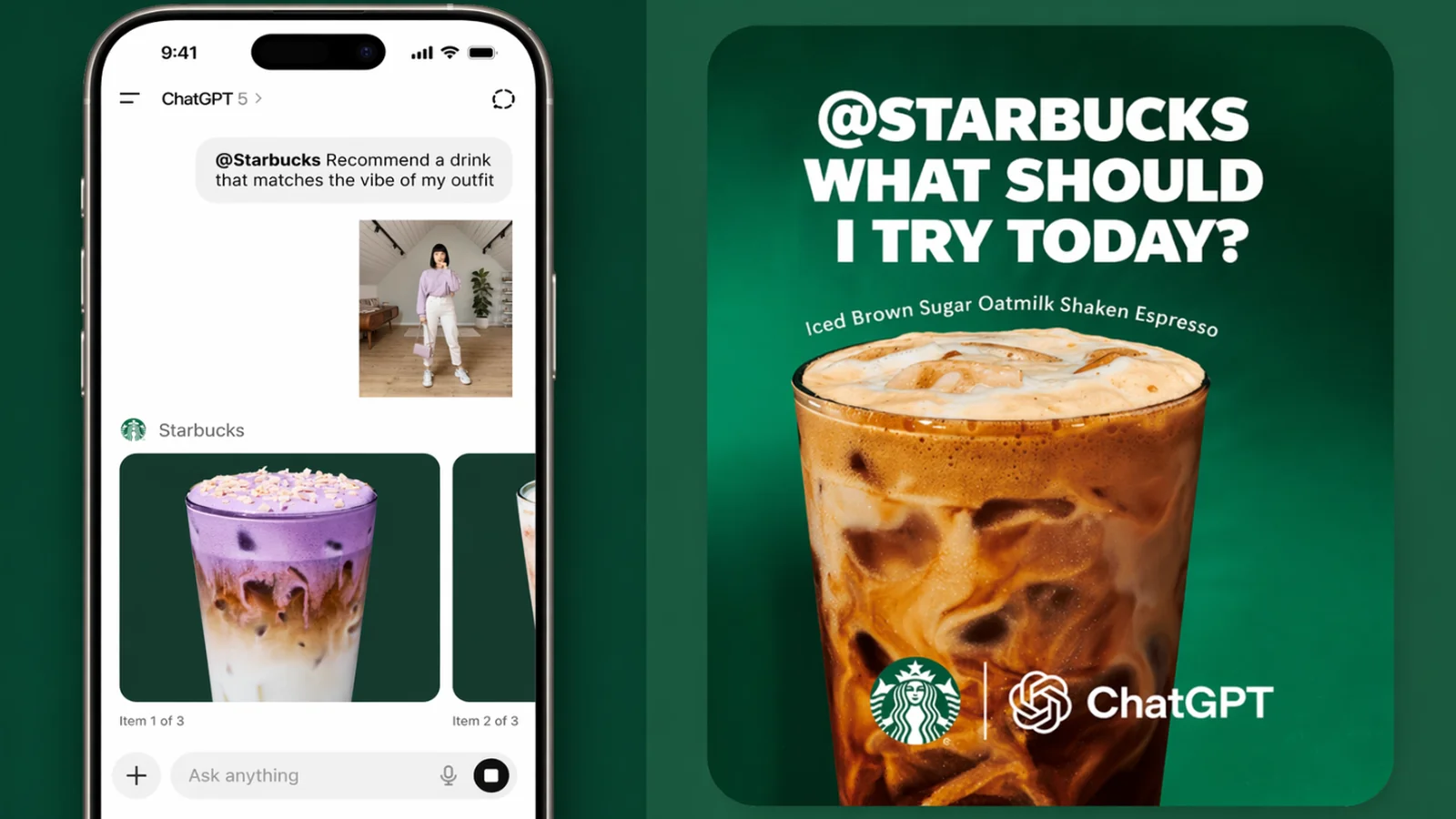
The coffee giant launched a beta version of a Starbucks app within ChatGPT on Wednesday, allowing users to discover beverages through conversational prompts and imagery rather than traditional menu browsing.
Paul Riedel, Starbucks senior vice president of digital and loyalty, said the move acknowledges a shift in how modern consumers approach their morning routines.
"Over the past year, one thing has become clear: customers aren't always starting with a menu," Riedel said in a blog published on Starbucks.com. "They're starting with a feeling."
How it works
The integration allows users to describe their current state of mind — such as "warm and cozy" or "sunny and refreshing" — to receive curated drink recommendations. The tool also supports visual inputs; users can upload a photo representing their current aesthetic and tag @Starbucks to receive a matching suggestion.
According to Riedel, the goal is to capture the "moment of inspiration" that occurs before a customer even reaches the store.
"People open chat tools to think out loud — to describe the kind of moment they're in, or imagine something they want to create," Riedel said. "We want to meet customers right in that moment of inspiration and make it easier than ever to find a drink that fits."
Innovation and connection
While the technology leans heavily on AI, the company maintains that the primary objective is to streamline the in-store experience and bolster the relationship between staff and patrons.
Riedel said the tool is intended to help customers arrive at the counter feeling more "ready and inspired," which in turn supports baristas by facilitating smoother interactions during the ordering process.
"This is the kind of technology that sparks creativity and helps customers discover something new," Riedel said. "It does it in a way that still feels unmistakably Starbucks — warm, inviting and rooted in creativity."
Looking ahead
The ChatGPT integration is in a beta phase, serving as a testing ground for the company to refine its AI strategy. The company indicated that it will continue to explore how emerging technology can support its workforce while "delighting" its digital-first customer base.
"As a beta experience, it's also an opportunity for us to listen, learn and refine as we go," Riedel said. "This is only the beginning."
Related Media
Subscribe
Get the latest news and resources from Fast Casual.
Recent Posts