Staffing
3 ways restaurants can reduce employee burnout during peak demand
The FIFA World Cup drove record traffic for many restaurants, but it also exposed the hidden costs of burnout. Here's what operators can learn before the next surge.
July 29, 2026 by Paula Allen — Global Leader of Research and Insights, TELUS Health
 ChatGPT
 Grok
Grok Perplexity
 Claude
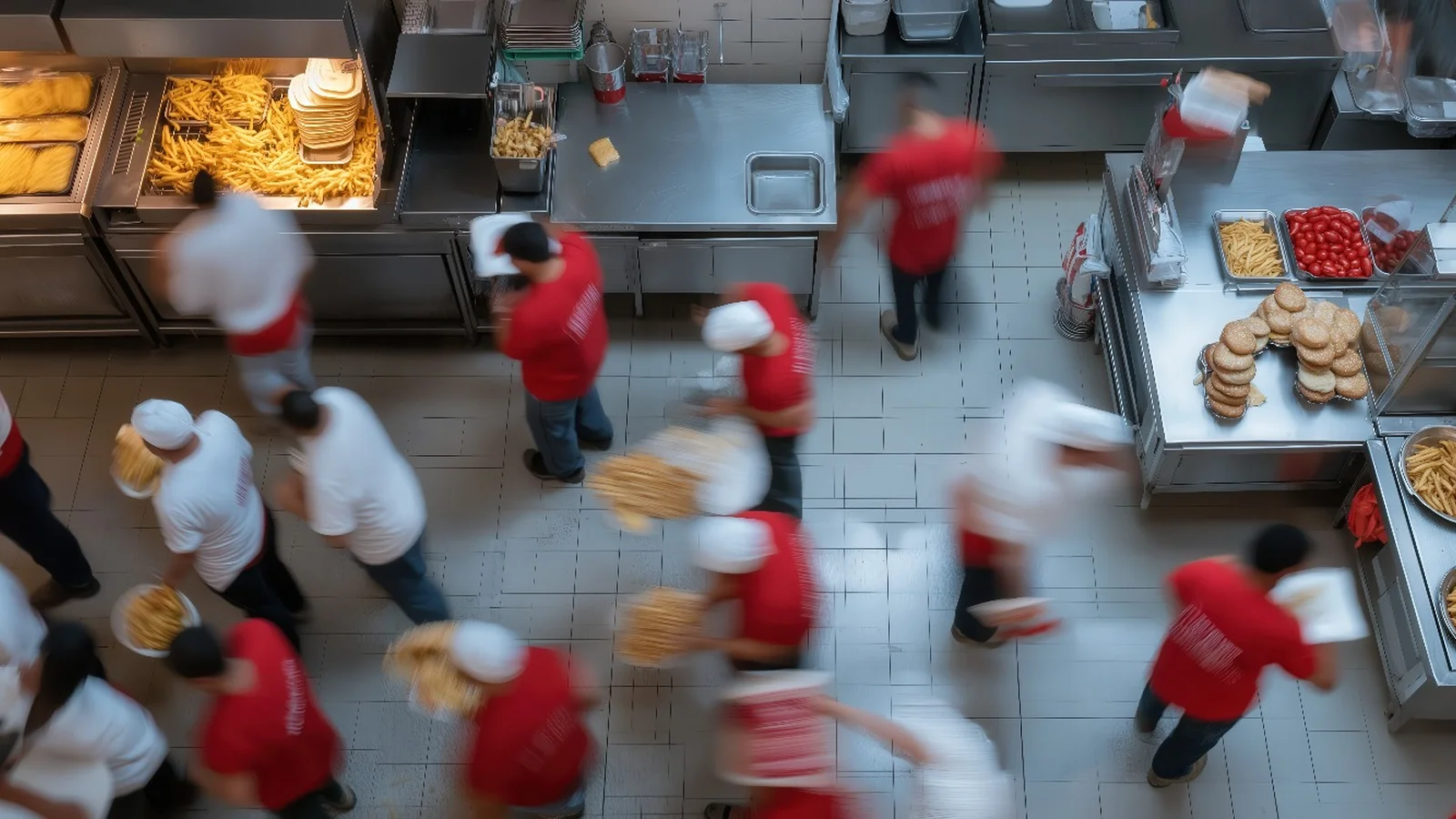
Thanks to the FIFA World Cup wrapping up across North America, America's restaurants were reveling in an undeniable business boom. Recent transactional data from Square shows that throughout the tournament, host cities like Boston, Philadelphia and New York saw a 20.2 percent jump in late-night (10 p.m. – 1 a.m.) transactions compared to typical baseline periods. Specifically in New York, which hosted a major share of games, workers were grinding through extended matchday hours to keep pace with packed house after packed house.
For restaurant owners, this surge feels like a victory, but the sudden pressure wave was a stress test for an already fragile workforce.
When we surveyed 5,000 U.S. employees earlier this year for the TELUS Mental Health Index, we found that the food service sector scored 62.8 out of 100. That lands the industry firmly in the "strained" category, sitting well below industries like construction, healthcare, and technology, which average between 68.2 and 69.2.
High-traffic events are not the sole reason for the industry's mental health crisis. Rather, they magnify existing issues and show how rapidly they compound during high-stakes moments. When staff are asked to absorb 20 percent surges in volume overnight, their limits are directly tested, especially for a workforce that is already close to running on empty.
For decades, the restaurant business has normalized the "Gordon Ramsay" stereotype – grueling hours, back-to-back "clopening" shifts, and the expectation that great employees can simply shrug off high-volume pressure. But powering through is a financial illusion.
Studies show that 75 percent of food and restaurant workers live paycheck to paycheck, yet a majority feel their leadership cannot empathize with that struggle. While operators face immense pressure to keep businesses running, the front-line staff bears the financial stress of what it means to miss a shift or take the night off. Because tips make up a significant portion of their income, workers are forced to constantly be "on" meaning — be friendly, engaged and appear at ease, even when masking deep exhaustion.
Burnout is rarely sudden. It doesn't start with someone quitting. It builds up as "presenteeism" where your team is physically at work, but they can only give a fraction of themselves due to mental or emotional exhaustion. The Index revealed 62 percent of food service employees surveyed are working while mentally or physically unwell at least one day a week.
This silent drain costs operators an average of 33 days in lost productivity per affected worker each year. Fearing they will disappoint their teams or jeopardize their financial security, workers often overextend themselves rather than advocate for their workload limits.
During a massive event that draws in millions of visitors, like the FIFA World Cup, presenteeism can apply other pressures to the sector including slower service, compromised food safety, negative customer experiences, and ultimately, lost revenue during high-profit windows. Staff are also expected to absorb the brunt of customer incivility, with research indicating that customers have become more demanding and less empathetic as staffing shortages persist.
It's important to consider how much of that growth is being built on unsustainable labor practices? How can we alter the operational side of the business without hurting sales?
According to the Index, affordability is the single largest barrier to seeking mental health support for55 percent of food service workers, while 46 percent report having no savings to cover essential expenses.
To protect both people and profits, restaurant operators must shift from viewing burnout as an individual employee flaw to treating it as an operational hazard. Leaders must prioritize predictability, culture and support. A sustainable culture can be built through three primary operational shifts:
- Implement "surge support" scheduling: Just as ingredient inventory is forecasted for big game days, emotional and physical capacity must also be forecasted. Avoid scheduling back-to-back closing and opening shifts during high-volume weeks. Build in mandatory, structured recovery breaks during long shifts, and ensure staff are cross-trained so no single position bears the brunt of a rush.
- Buffer staff from customer incivility: Fan passion can quickly turn toxic. Operators must establish clear, non-negotiable boundaries regarding customer behavior. Give managers de-escalation training and the authority to step in immediately to protect staff from verbal abuse. When employees know their leadership has their back, their stress levels drop significantly.
- Provide low-barrier, practical care: Since affordability is such a massive hurdle, traditional healthcare packages often miss the hourly workforce. Operators need to look at implementing more accessible Employee Assistance Programs that offer immediate, digital and confidential support.
When the final whistle blows and the fans disperse, restaurant operators are still left with their teams.
As with all industries, the wellbeing of restaurant employees is directly tied to the health of the industry itself. Burnout is an economic, cultural, and systemic issue. Supporting food service workers through reasonable scheduling, psychological safety, tailored wellbeing support, and healthier workplace cultures will improve employee wellness while helping build a more sustainable industry.
About Paula Allen

Paula Allen is the Global Leader of Research & Client Insights at TELUS Health and is an expert in all areas of workplace mental health. Building on a clinical background, she has more than 20 years of experience relating to workplace research, product development and operational leadership. Paula is also a sought-after speaker for her knowledge and expertise in current issues and the future direction of health, well-being, productivity, and related risk management.
Related Media
Subscribe
Get the latest news and resources from Fast Casual.
Recent Posts


Recent Podcasts